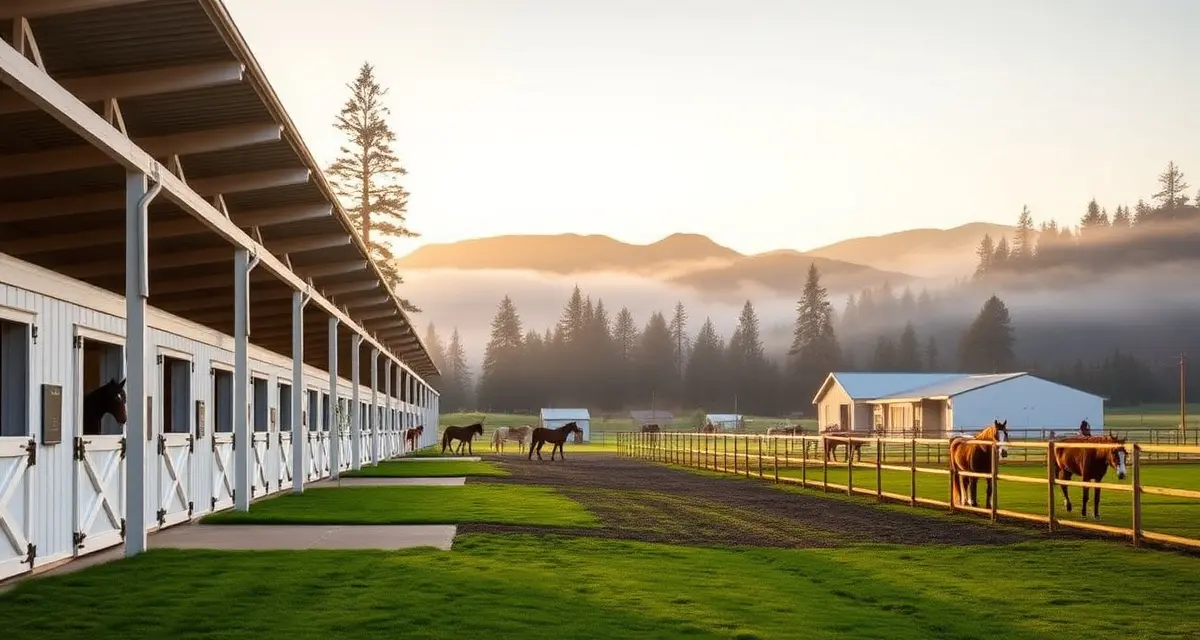
Barn Management for Washington State Equine Facilities
Washington state offers one of the most varied equestrian environments in the country. The west side of the Cascades is wet, green, and horse-dense in areas like the Snohomish Valley and Pierce County. The east side is drier, more agricultural, and supports a strong western discipline and ranch horse community. Managing a barn in Washington requires understanding which side of that divide you're on and what it means for day-to-day operations.
Washington's Equine Geography
Western Washington. The I-5 corridor from Bellingham to Olympia has a substantial recreational and competitive horse population. The Puget Sound area combines suburban demand with agricultural land that supports boarding operations at various scales. Snohomish County is one of the most horse-dense counties in the state. Disciplines here run the gamut: hunter/jumper, dressage, trail, and therapeutic riding programs are all well-represented.
Eastern Washington. The Columbia Basin and Palouse regions have deep agricultural roots that include significant ranch horse, reining, and rodeo traditions. The Yakima Valley and Tri-Cities area have active equestrian communities with strong western discipline representation. Facilities here tend to be larger in acreage, with different management challenges than the smaller urban and suburban barns of western Washington.
Climate and Seasonal Challenges
Rain and footing (western Washington). The persistent rain of western Washington from October through May is the defining operational reality for facilities west of the Cascades. Managing paddock footing through a wet season is a year-round project. Gravel pads, rubber footing, covered arenas, and careful turnout rotation protocols are investments that most established facilities make over time.
Turnout management during wet seasons in western Washington often means restricting horses to covered areas or sacrifice lots to protect primary pastures. Documenting these deviations from standard turnout schedules matters for boarder communication.
Heat (eastern Washington). Eastern Washington summers are genuinely hot, with temperatures regularly exceeding 100°F. Summer management in the Columbia Basin looks more like management in the Southwest: early morning turnout, afternoon shade, careful water monitoring.
Smoke. Washington's proximity to active fire country means air quality events are an annual concern in both eastern and central Washington. Management protocols for high smoke days, including keeping horses in when air quality index readings are poor, are increasingly standard at eastern and central Washington facilities.
Veterinary and Farrier Resources
Western Washington has strong veterinary resources, with several equine-focused ambulatory practices serving the Puget Sound area. The Washington State University College of Veterinary Medicine in Pullman provides referral services for complex cases and has significant equine expertise.
Rural facilities, particularly in eastern Washington, may have longer distances to ambulatory vet services. This makes thorough on-site record-keeping and clear protocols for deciding when to call more important. Vet communication documentation that captures observations clearly is especially useful when you need to convey a presentation accurately over the phone for triage.
Farrier resources vary similarly. Urban and suburban barns in western Washington generally have adequate farrier access. Rural eastern Washington facilities may work with farriers who cover significant distances, requiring more advance scheduling and flexibility.
Management Considerations for Washington Barns
Mud management. The investment in covered areas, footing material, and drainage infrastructure that most western Washington facilities make over time changes the operational picture significantly. A barn with good covered infrastructure can operate more consistently through wet seasons. Turnout schedule management protocols that reflect your facility's infrastructure determine what "normal" looks like and what constitutes a deviation.
Border-to-owner communication. Washington boarders, particularly in the competitive western Washington market, have high expectations around communication transparency. Digital access to care records is increasingly standard in this market. BarnBeacon's owner-facing tools give boarders the access they expect without requiring staff to compile and send information manually.
Eastern Washington regulations and industry structure. Washington State Department of Agriculture has resources specific to the state's equine industry, and the Washington State Horse Council is an active organization. For facilities in the eastern part of the state, understanding the regional industry context and maintaining appropriate regulatory compliance is part of operations management.
What are the biggest management challenges for western Washington barn managers?
Persistent winter rain and mud management. Facilities that invest in covered infrastructure and systematic turnout rotation handle it better than those managing it reactively.
How does BarnBeacon help with smoke and air quality protocols?
BarnBeacon's scheduling tools let you record weather-based deviations from standard schedules, so you have documentation of what happened and why when boarders ask about turnout modifications.
Is BarnBeacon appropriate for eastern Washington ranch-style operations?
Yes. BarnBeacon scales across facility types and disciplines, from suburban boarding barns to working ranch facilities.
FAQ
What is Barn Management for Washington State Equine Facilities?
Barn management for Washington State equine facilities refers to the systems, practices, and software used to operate horse boarding, training, and care operations across the state. Washington's unique geography—wet western regions like Snohomish County and drier eastern areas like the Yakima Valley—means facilities must adapt their daily routines, footing maintenance, feeding programs, and record-keeping to local climate and discipline demands. Effective barn management coordinates horse care, client communication, billing, and compliance into a coherent daily operation.
How much does Barn Management for Washington State Equine Facilities cost?
The cost of barn management in Washington State varies significantly by facility type and scale. Basic management software tools start around $50–$150 per month for small boarding operations. Larger facilities with training programs, lesson schedules, and multiple staff may invest $200–$500 monthly in comprehensive platforms. Labor, feed, farrier, and veterinary coordination add operational costs on top of software. Eastern Washington facilities with larger acreage often face different expense profiles than smaller suburban barns on the west side.
How does Barn Management for Washington State Equine Facilities work?
Barn management in Washington works by combining daily horse care routines with organized systems for tracking feed, health records, turnout schedules, and client billing. On the wet west side, this includes proactive mud and footing management during long rainy seasons. On the drier east side, it means managing dust, irrigation, and hay storage. Software platforms centralize communication, automate invoicing, and log veterinary and farrier visits, reducing administrative burden and improving care consistency across disciplines.
What are the benefits of Barn Management for Washington State Equine Facilities?
Effective barn management in Washington State improves horse health outcomes, reduces missed billing, and keeps clients informed and satisfied. It helps facilities handle the distinct challenges of each region—managing rain rot and mud in western Washington or coordinating large-acreage operations in the Columbia Basin. Strong systems reduce staff turnover by clarifying responsibilities, support compliance with state animal care standards, and make it easier to scale operations without losing the personal attention clients expect from quality equine facilities.
Who needs Barn Management for Washington State Equine Facilities?
Any facility caring for horses in Washington State benefits from organized barn management practices—from small hobby farms in Pierce County to large boarding and training barns in Snohomish County or competitive facilities near Yakima. Therapeutic riding programs, dressage and hunter/jumper barns on the west side, and ranch horse and reining operations on the east side all have distinct needs but share common challenges: consistent horse care, client retention, and financial sustainability.
How long does Barn Management for Washington State Equine Facilities take?
Implementing basic barn management systems takes days to a few weeks for small operations. Adopting dedicated software—including data migration, staff training, and workflow setup—typically takes two to six weeks depending on facility size. Ongoing management is continuous; Washington's rainy season requires sustained footing and health monitoring from October through April on the west side. East-side facilities plan around irrigation seasons and summer heat. Good management is a permanent operational commitment, not a one-time project.
What should I look for when choosing Barn Management for Washington State Equine Facilities?
When choosing a barn management approach or software in Washington, prioritize tools that handle wet-climate health tracking (rain rot, thrush, respiratory issues), support flexible billing for boarding and training, and offer client-facing communication features. Look for platforms with mobile access for managers working across large acreage, strong customer support, and the ability to track farrier and veterinary schedules. Regional peer recommendations from Snohomish County or eastern Washington equestrian communities are especially valuable for understanding real-world performance.
Is Barn Management for Washington State Equine Facilities worth it?
Yes—organized barn management is worth the investment for Washington State equine facilities. The state's climate variability, from the wet Puget Sound lowlands to the arid eastern plateau, creates compounding operational challenges that informal systems struggle to handle. Facilities that implement clear routines, health monitoring, and financial tracking report better horse outcomes, higher client retention, and less owner burnout. Whether you operate a small backyard boarding barn or a competitive training facility, strong management practices protect both the horses and the business.
Sources
- Washington State University Extension, equine management resources
- Washington State Horse Council, industry information
- Washington State Department of Agriculture, equine industry resources
- American Association of Equine Practitioners (AAEP), equine care guidelines