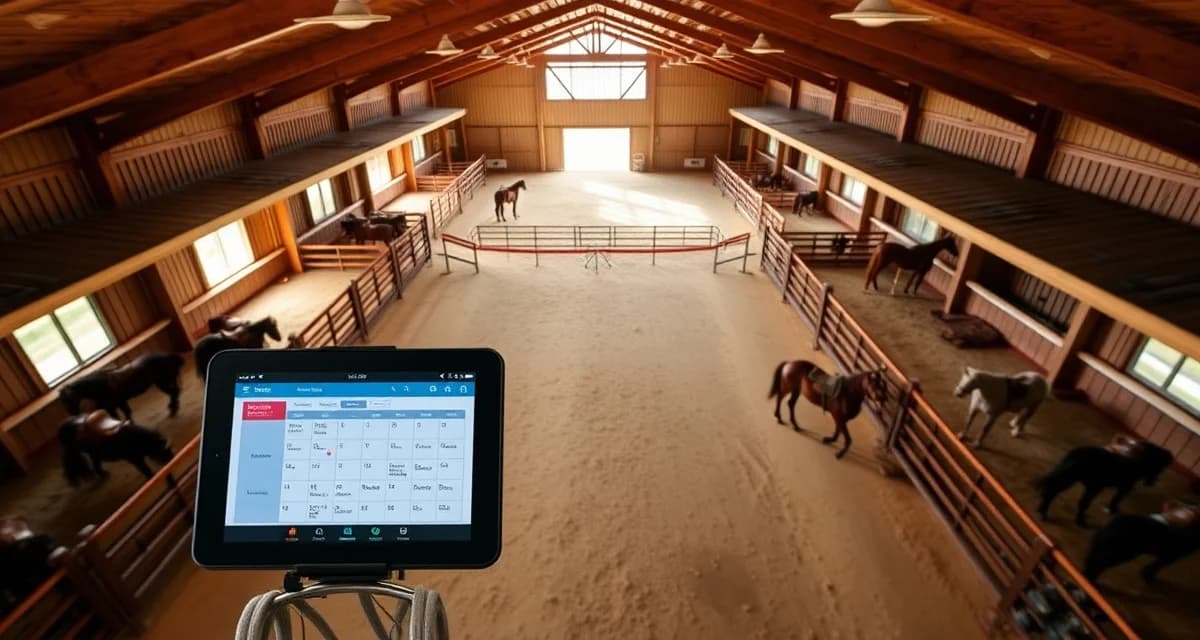
Western Barn Scheduling: Complete Guide for Facility Managers
Western horse events generated $2.4 billion in economic activity in 2024, and the training and competition schedules behind that activity create daily coordination challenges that most barn managers solve with a combination of whiteboards, texts, and memory. That combination works until you have 20 horses in different disciplines, three trainers, and an arena that everyone needs at the same time.
TL;DR
- Western facilities carry billing complexity -- cattle fees, arena time, split partner charges, discipline-specific packages -- that generic barn software was not built to handle.
- Multi-discipline operations running cutting, reining, and western pleasure under one roof need billing tools that differentiate by competition organization.
- Futurity development timeline visibility shifts owner communication from reactive to proactive, reducing check-in calls and disputes.
- NRHA, NCHA, and AQHA compliance requirements for drug testing and withdrawal periods require records tied to planned show entry dates.
- Purpose-built western facility software eliminates the spreadsheet workarounds that most operations currently use to fill software gaps.
This guide covers how to build a scheduling system at a western barn that handles the real variation across barrel racing, reining, cutting, and trail programs, without creating more administrative overhead than it saves.
Get Started with BarnBeacon
Western facility billing, compliance tracking, and futurity program management require tools built for the specific demands of competitive western operations -- not generic barn software adapted with workarounds. BarnBeacon handles multi-discipline billing, NRHA and NCHA compliance records with withdrawal period alerts, and futurity development tracking with owner portal visibility in a single platform. If your western operation is managing these workflows across spreadsheets and manual entries, BarnBeacon gives you an integrated alternative.
Scheduling Framework for Western Facilities
Step 1: Map your resources. List every training space: the pattern arena, the outdoor arena, the round pen, the sorting pen, and any other dedicated spaces. Assign base availability hours for each.
Step 2: Assign discipline priorities. Performance horses in active show programs generally get priority access to the specialized spaces (pattern arena for reiners, cattle pen for cutters). General conditioning and trail horses work around those priorities. Make this explicit rather than leaving it to daily negotiation.
Step 3: Build the recurring base schedule. Put repeating training rides, regular cattle sessions, and lesson slots in first. This is the skeleton that everything else fits around.
Step 4: Layer in the competition calendar. Add show haul-out dates, return dates, and recovery periods for horses on the competition schedule. When the trainer can see which horses are away and which are home, adjusting the weekly schedule around those absences becomes easier.
Step 5: Create a system for change requests. When trainers or clients want to adjust the schedule, there needs to be a defined process. A group text thread is not a process. A system where requests can be made, reviewed, and confirmed creates accountability.
Managing Arena Conflicts
Arena conflicts are the most common scheduling problem at western facilities, and they create real tension between client groups. Here's how to manage them before they become disputes:
First-come, first-served doesn't work at facilities with multiple disciplines. A barrel racer who gets to the arena at 7 AM to set barrels effectively claims the arena for 45 minutes. A reiner who needs the space for pattern work at 7:30 is now waiting. Without a booking system, this creates daily friction.
An arena booking system doesn't have to be complicated. A shared digital calendar where trainers can book arena time for specific disciplines works. The key is that it's visible to everyone, shows conflicts before they happen, and has a defined person who resolves disputes when they arise.
Different use types need different time windows. Barrel racers running patterns need the full arena and can only work one horse at a time on barrels. Reiners working patterns also need focus time. Trail horses and conditioning rides can often share the arena more easily. Building those distinctions into your booking system prevents the scenario where a beginner trail rider shows up to find the arena full of spinning reiners.
Scheduling Around the Competition Calendar
The western competition calendar, especially for barrel racing, is relentless. Some competitive clients attend events almost every weekend from March through November. Building a training schedule that accounts for that frequency requires planning.
Build in recovery days. Horses that travel to weekend events generally need one to two days of light work or rest before returning to full training. If you schedule a horse for a hard training session the Monday after a big weekend, you're ignoring their actual physical state.
Plan the home schedule alongside the away schedule. When a trainer takes horses to a show, the horses who stay home still need training. Who's covering them? Is the arena available for the home program? These questions need answers before the trainer leaves, not after.
Track haul-out frequency. Some barrel racing clients want to run at every available event. That level of travel and competition has physical consequences for horses. Tracking how often a horse hauls out and runs, and having a conversation with owners about sustainable competition schedules, is part of managing the horse's long-term soundness.
Using Software for Western Barn Scheduling
BarnBeacon's barn management software handles the multi-discipline scheduling complexity that western facilities deal with. Arena booking, trainer calendars, and horse-level scheduling are integrated so that changes in one area are visible across the system.
The platform ties health records to the schedule, so a horse on a post-competition recovery protocol shows that restriction in the training schedule. When a vet recommends three days of light work after a weekend event, that note translates into schedule adjustments rather than a sticky note that gets ignored.
For a full picture of how scheduling fits into western facility operations, see the western barn operations guide.
Scheduling for Multiple Trainers
Western barns with multiple trainers need a scheduling approach that gives each trainer visibility into the full facility calendar without requiring constant coordination.
Shared calendar access. All trainers should see all booked arena time, not just their own. Surprises are the primary cause of scheduling conflicts.
Clear priority rules. When two trainers both want the pattern arena at the same time, who gets it? Having a rule (performance horses in show prep get priority, for example) removes the personal awkwardness from those situations.
Regular schedule review. A brief weekly review of the coming week's schedule, even just 15 minutes, catches conflicts before they happen and lets trainers adjust proactively.
Frequently Asked Questions
How do western barn managers handle scheduling?
The most effective western barn managers use a shared booking system for arenas and training spaces, build the competition calendar into the weekly schedule rather than treating it separately, and assign clear priority rules so discipline conflicts are resolved by policy rather than by daily negotiation.
What software do western facilities use for scheduling?
Western facilities need scheduling software that handles multiple disciplines, multiple trainers, and a competition calendar that affects who's home and who's away each week. BarnBeacon is designed for this multi-variable scheduling environment.
What are the unique scheduling challenges at western barns?
Discipline diversity creates arena conflict when multiple discipline groups have specialized space needs. Competition travel creates schedule disruption when horses and trainers move on and off the property regularly. Managing both simultaneously without a structured system creates the daily friction that exhausts barn managers.
How do western facilities handle billing for cattle-related charges?
Cattle charges -- whether per-head fees for working specific cattle, pen rental, or cattle sourcing costs -- should be captured at the time of each session rather than estimated at month end. Create dedicated billing categories for cattle-related charges in your management system so they are clearly separate from board, training, and arena fees on the owner's invoice. When multiple clients use the same cattle group in a session, the cost allocation method should be defined in writing and agreed to before the session occurs.
What compliance records are most critical for western performance facilities?
For NRHA and NCHA competing horses, joint injection records with specific product names, administration dates, and calculated clearance dates tied to planned competition entries are the highest-stakes compliance records. AQHA registration compliance -- ensuring competing horses have current registration and eligibility for entered classes -- is a second critical documentation area. Maintain these records in a system that allows date-based queries so you can pull clearance status for any horse before submitting an entry.
What is Western Barn Scheduling: Complete Guide for Facility Managers?
Western Barn Scheduling: Complete Guide for Facility Managers is a comprehensive resource for equine facility operators running western disciplines like barrel racing, reining, cutting, and trail programs. It covers how to build scheduling systems that handle multi-discipline arena conflicts, trainer coordination, and the billing complexity unique to western operations — including cattle fees, split partner charges, and discipline-specific packages — replacing the whiteboards and text threads most barns currently depend on.
How much does Western Barn Scheduling: Complete Guide for Facility Managers cost?
The guide itself is free educational content published on BarnBeacon. The scheduling software solutions it recommends vary by provider and facility size, but purpose-built western barn management platforms typically range from $50 to $300 per month depending on horse count, feature set, and the level of compliance tracking needed for NRHA, NCHA, or AQHA show programs.
How does Western Barn Scheduling: Complete Guide for Facility Managers work?
The guide walks facility managers through auditing their current scheduling gaps, then building a system that maps each discipline's unique needs — arena time blocks, futurity development timelines, drug testing withdrawal windows — to a unified calendar. Billing rules for cattle work, multi-trainer splits, and competition organization fees are configured once, then applied automatically, eliminating manual spreadsheet workarounds with each new booking.
What are the benefits of Western Barn Scheduling: Complete Guide for Facility Managers?
Key benefits include reduced arena conflicts across cutting, reining, and western pleasure programs, automated billing that correctly handles cattle fees and partner splits, proactive owner communication driven by futurity timeline visibility, and compliance recordkeeping tied to planned show entry dates. Facilities report fewer owner check-in calls and billing disputes after moving from ad hoc text coordination to a structured scheduling system.
Who needs Western Barn Scheduling: Complete Guide for Facility Managers?
Any western barn running more than a handful of horses across multiple disciplines will benefit, but the guide is especially relevant for facilities managing 20 or more horses with multiple trainers sharing one arena. Operations that combine cutting, reining, barrel racing, or trail programs under one roof — and bill differently per discipline or competition organization — are the primary audience.
How long does Western Barn Scheduling: Complete Guide for Facility Managers take?
Initial setup of a purpose-built western barn scheduling system typically takes one to two weeks, including configuring discipline-specific billing rules, importing horse and owner records, and training staff. The guide's framework can be mapped out in a single planning session. Ongoing time savings begin immediately, with most facilities recovering setup time within the first month through reduced scheduling conflicts and faster invoice generation.
Related Articles
- Eventing Barn Scheduling: Complete Guide for Facility Managers
- Hunter/Jumper Barn Scheduling: Complete Guide for Facility Managers
Sources
- American Quarter Horse Association (AQHA)
- National Reining Horse Association (NRHA)
- National Cutting Horse Association (NCHA)
- American Horse Council
- Oklahoma State University Extension Equine Program