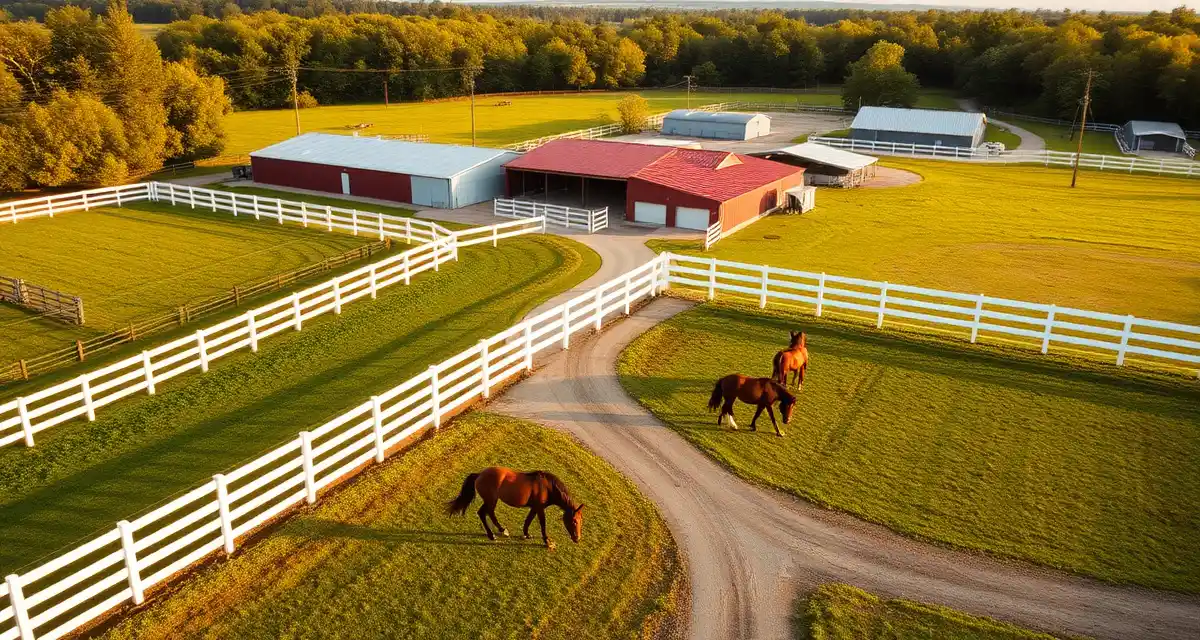
Equestrian Operations in Maryland
Maryland has one of the richest equestrian histories and most active horse industries on the East Coast. The state is home to Preakness Stakes at Pimlico, a long tradition of steeplechase racing, a strong fox hunting culture in the western counties, active hunter/jumper and dressage programs, and a significant Thoroughbred breeding operation. The combination of mid-Atlantic location, proximity to major East Coast markets, and a riding culture that runs deep across the state makes Maryland a distinctive place to operate an equine facility.
Regional Markets
Baltimore County, Howard County, and the northern Maryland counties including Baltimore, Harford, and Carroll have strong boarding markets with high demand for quality facilities near suburban populations. Land values in these areas are significant, and facility investment requirements are high, but the market supports premium rates for well-run operations.
Montgomery County and the Maryland suburbs of Washington DC have an active equestrian community, with hunter/jumper and dressage programs particularly well represented. This market is competitive, well-educated about quality, and willing to pay for professional management.
The Eastern Shore offers a different character: more rural, more accessible land, and a strong pleasure riding and trail riding tradition. Facilities on the Eastern Shore serve a less dense but dedicated local community and, in some cases, attract clients who prefer a quieter environment than the horse-dense suburbs.
Western Maryland, particularly Frederick and Washington counties, has a long equestrian tradition connected to the farming culture and fox hunting history of the region. This area has both working farms and dedicated equestrian facilities.
Racing and Thoroughbred Industry
Maryland's Thoroughbred racing industry is centered at Laurel Park and Pimlico Race Course. The state supports a significant training and breeding community, with farms in Carroll, Frederick, and Baltimore counties producing horses that compete at the highest levels of the sport.
Facilities serving the Maryland racing industry operate under Maryland Racing Commission regulations and face more stringent documentation, medication, and health requirements than general equine facilities. This is a specialized segment of the market that rewards professional operations.
Steeplechase racing has a devoted following in Maryland, with the Maryland Hunt Cup, My Lady's Manor, and the Grand National all drawing significant attention. Facilities that work with steeplechase horses have their own operational norms tied to this demanding sport.
Fox Hunting and Equestrian Tradition
Maryland has some of the oldest established fox hunting clubs in the country. The Green Spring Valley Hounds, My Lady's Manor, and other recognized hunts represent a tradition that connects the state's equestrian culture to its agricultural heritage. Facilities that serve the fox hunting community, whether for boarding hunt horses or hosting related social events, tap into a well-established and financially strong client base.
Health Requirements and Regulations
Maryland requires a current negative Coggins test for horses at public events and for horses moving into the state. The Maryland Department of Agriculture oversees equine health programs, and the state participates in regional disease surveillance networks.
Maryland has an Equine Activity Liability Act that provides protection for equine professionals, though liability waivers should still be used and reviewed by legal counsel familiar with Maryland law.
Environmental regulations in Maryland are significant, particularly for facilities near the Chesapeake Bay watershed. Manure management, runoff control, and nutrient management plans may be required for facilities of certain sizes or locations. The Maryland Department of the Environment and the Maryland Agricultural Cost-Share Program both have resources for farmers and equine facility operators addressing these requirements.
Barn Management
Maryland facilities that serve multiple disciplines, boarding clients, and the racing industry simultaneously benefit from organized management systems that can track diverse service types, health requirements, and billing arrangements. BarnBeacon helps Maryland barn managers maintain professional documentation standards without the administrative burden of paper-based systems.
For more on managing multi-discipline facilities, see our guides on multi-discipline barn management and medication tracking.
FAQ
What is Equestrian Operations in Maryland?
Equestrian operations in Maryland encompass the full range of horse-related businesses across the state, including boarding facilities, training barns, breeding farms, lesson programs, and competition venues. Maryland's equine industry is one of the most active on the East Coast, anchored by Thoroughbred racing at Pimlico, steeplechase traditions, fox hunting culture, and strong hunter/jumper and dressage communities. Operations range from small private farms in rural counties to large professional facilities serving the suburban markets around Baltimore and Washington DC.
How much does Equestrian Operations in Maryland cost?
Costs for equestrian operations in Maryland vary significantly by region and service type. Boarding rates in competitive suburban markets like Montgomery and Howard counties can range from $800 to $2,000+ per month for full-care stalls. Land acquisition and facility build-out costs are substantial near Baltimore and DC. The Eastern Shore offers more accessible land prices. Operating costs include feed, bedding, labor, veterinary care, farrier services, insurance, and equipment maintenance, which typically run $400–$800 per horse per month before overhead.
How does Equestrian Operations in Maryland work?
Equestrian operations in Maryland function by providing structured care, training, or competition services for horses and their owners. A boarding facility maintains daily feeding, turnout, stall cleaning, and health monitoring. Training barns add structured riding programs and coaching. Breeding operations manage reproductive cycles and foal care. Most Maryland facilities serve multiple disciplines simultaneously and rely on a combination of board income, lesson fees, and show or event revenue. Strong management systems are essential for tracking horse health, client billing, and staff scheduling.
What are the benefits of Equestrian Operations in Maryland?
Maryland offers significant advantages for equestrian operations: proximity to a dense, affluent client base across the Baltimore-Washington corridor, a deep regional riding culture that sustains year-round demand, and access to premier competition venues throughout the mid-Atlantic. The state's Thoroughbred industry creates a strong support network of experienced equine professionals, vets, and farriers. Well-run Maryland facilities can command premium rates, benefit from an educated clientele, and tap into multiple disciplines including racing, eventing, dressage, and hunter/jumper.
Who needs Equestrian Operations in Maryland?
Anyone involved in housing, training, breeding, or competing horses in Maryland benefits from understanding local equestrian operations. This includes barn owners and managers, horse owners evaluating boarding options, trainers establishing programs, investors considering equine real estate, and new entrants to the industry. Given Maryland's competitive market—especially in suburban counties—both facility operators and horse owners need to understand regional pricing norms, discipline-specific expectations, and the differences between the Eastern Shore, western counties, and metro-adjacent markets.
How long does Equestrian Operations in Maryland take?
Establishing a functioning equestrian operation in Maryland typically takes one to three years from property acquisition to stable revenue. Facility permitting, construction or renovation, and establishing a client base each require significant lead time. Building a strong boarding or training program depends on reputation, word-of-mouth referrals, and competition visibility—none of which happen overnight. Existing operations that are already licensed and staffed can be transitioned more quickly, often reaching operational stability within six to twelve months under new ownership with a clear management plan.
What should I look for when choosing Equestrian Operations in Maryland?
When evaluating an equestrian operation in Maryland, prioritize location relative to your target clientele, quality of pasture and stall infrastructure, water access and drainage, trailer access, and proximity to competition venues. Assess the current client roster, trainer relationships, and lease or ownership structure carefully. Staffing depth matters in a competitive labor market. For buyers, review regulatory compliance, zoning status, and any environmental considerations. For horse owners choosing a facility, look for transparent communication, consistent care standards, qualified staff, and a management culture that aligns with your discipline.
Is Equestrian Operations in Maryland worth it?
For the right operator, equestrian operations in Maryland are worth the investment. The state's dense equestrian population, strong competition culture, and willingness to pay for quality create real revenue opportunity—particularly in the Baltimore, Howard, and Montgomery County corridors. Margins are tight and management demands are high, but well-run Maryland facilities consistently maintain strong occupancy and client retention. The key is matching your operation's scale and discipline focus to the right regional market. Operators who invest in professional management systems, quality infrastructure, and consistent communication tend to see strong long-term returns.