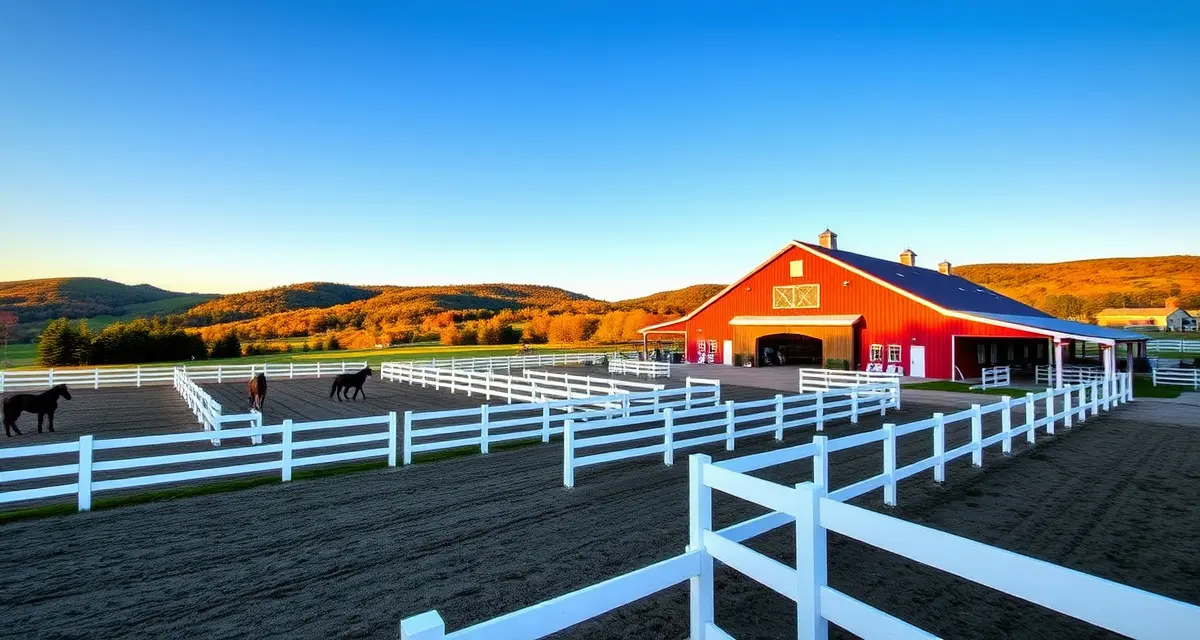
Equine Facilities in New Hampshire
New Hampshire may be small in size, but its equestrian community is deeply rooted. From the White Mountains foothills to the seacoast region, the state supports a wide range of horse operations including boarding barns, lesson programs, trail riding outfitters, and competitive show facilities. If you manage horses in New Hampshire, you know the territory comes with its own set of demands.
The New Hampshire Equestrian Landscape
The state's geography divides its horse population across distinct regions. The Lakes Region around Lake Winnipesaukee hosts a concentration of private farms and boarding facilities that serve recreational riders and seasonal residents. The southern tier, particularly Rockingham and Hillsborough counties, holds the highest density of equine operations due to proximity to the Massachusetts border and commuter populations who keep horses locally.
The western Connecticut River Valley supports working farms and trail riding, while the North Country has fewer facilities but significant acreage available for those running larger grazing operations. Understanding which region you operate in matters when thinking about your client base, staffing availability, and winter logistics.
Seasonal Operations and Winter Management
Winters in New Hampshire are serious. Facilities that don't plan carefully for freeze-thaw cycles, snow removal, and extended cold snaps run into trouble fast. Frost depths can reach four feet or more in northern parts of the state, which makes water line insulation and heated automatic waterers essential rather than optional.
Most facilities in the state run on a two-season model: a full outdoor program from late April through October, and a reduced indoor program from November through March. Covered arenas are not a luxury here. If your facility lacks an indoor school, you'll lose boarding clients to competitors who have one the moment the ground freezes.
Feed management during winter months requires particular attention. Horses require significantly more forage calories to maintain body temperature in sub-zero temperatures. Facilities that track individual horse feed intake have a clear advantage in catching condition loss before it becomes a health crisis.
Land and Facility Costs
Property values in New Hampshire vary considerably. Southern counties near Manchester and Nashua command premium prices for rural land, making it harder for new facilities to establish without significant capital. The Lakes Region and western portions of the state offer more affordable acreage, though infrastructure costs remain high.
Zoning for equine use is generally favorable across much of the state, and agricultural exemptions apply in many towns. If you're expanding or establishing a new facility, connecting with your local planning board early avoids surprises around manure management requirements and setback rules.
Staffing and Workforce
Finding reliable barn staff in New Hampshire is competitive. The hospitality and tourism industries in the Lakes Region and White Mountains draw from the same pool of workers. Facilities that offer housing, clear scheduling, and organized systems retain employees longer.
A tool like BarnBeacon helps managers assign and track daily tasks without relying on verbal handoffs that get forgotten during busy stretches. When your morning crew knows exactly what horses need what care before they walk into the barn, turnover in staffing causes fewer disruptions.
State Regulations and Horse Health
The New Hampshire Department of Agriculture, Markets and Food oversees equine health certificates, brand registration, and import requirements. Facilities that board horses coming from out of state need to stay current on Coggins testing and health certificate requirements, which vary by state of origin.
Equine infectious anemia, West Nile virus, and Eastern equine encephalitis are all present in the region. EEE in particular has been a concern in parts of the state, and core vaccination compliance should be something every boarding facility tracks and enforces as a condition of boarding agreements.
Building a Sustainable Facility
The most successful New Hampshire equine facilities are ones that have built loyal client bases through consistent communication and professional operations. Riders in this region often drive 30 to 45 minutes to their barns, which means they're invested clients who expect clear updates on their horses.
Offering owner portal access, digital invoicing, and health event notifications separates professionally run facilities from those still running on paper. As the equestrian community in the state grows and client expectations rise, the barns that invest in systems and communication tools tend to hold onto their clients through economic fluctuations and competitive pressures.
For more on managing your daily operations, see our guides on owner communication and barn staff onboarding.
FAQ
What is Equine Facilities in New Hampshire?
Equine facilities in New Hampshire encompass the full range of horse operations across the state, including boarding barns, lesson programs, trail riding outfitters, and competitive show venues. Spread across distinct regions from the Lakes Region to the southern tier, these facilities serve recreational riders, competitive equestrians, and working farm operators. New Hampshire's equestrian community is small but deeply established, with operations adapting to the state's varied geography and challenging four-season climate.
How much does Equine Facilities in New Hampshire cost?
Costs vary widely depending on the type of facility and services offered. Full-care boarding in southern New Hampshire typically runs $600–$1,200 per month, while self-care or pasture board in rural areas may start around $300. Lesson programs charge $50–$100 per session on average. Facility owners should factor in higher winter operating costs due to heating, bedding, and feed demands, which can significantly impact annual budgets compared to warmer-climate operations.
How does Equine Facilities in New Hampshire work?
Equine facilities in New Hampshire operate by providing boarding, training, lessons, trail access, or show infrastructure to horse owners and riders across the state. Barn managers coordinate daily feeding, turnout, stall cleaning, and veterinary scheduling. Many facilities use barn management software to track horse health records, billing, and staff tasks. Operations adjust workflows seasonally, tightening protocols in winter when frozen water lines, icy footing, and limited daylight create additional management challenges.
What are the benefits of Equine Facilities in New Hampshire?
Operating an equine facility in New Hampshire offers access to a loyal, year-round client base of horse owners who prefer keeping animals close to home rather than boarding out of state. The state's scenic landscapes support trail riding and agritourism revenue. Facilities near the Massachusetts border benefit from dense commuter populations seeking local boarding. Strong regional equestrian networks also create referral opportunities, and New Hampshire's agricultural tax programs can reduce property costs for qualifying operations.
Who needs Equine Facilities in New Hampshire?
Anyone managing horses in New Hampshire benefits from understanding the state's equine facility landscape. This includes boarding barn owners, lesson program operators, trail riding outfitters, competitive show managers, and private farm owners. It's also relevant to horse owners researching where to board or train, equine veterinarians and farriers building regional client routes, and new facility operators evaluating which New Hampshire region best fits their target clientele and operational model.
How long does Equine Facilities in New Hampshire take?
There is no single timeline for establishing or running an equine facility in New Hampshire. Startup phases—securing land, permitting, building, and filling stalls—typically take one to three years. Daily operations are continuous, with seasonal intensity peaks in winter and during spring mud season. Boarding relationships often run year-round on monthly contracts. Lesson programs and show facilities may follow academic or show-season calendars, with summer and fall representing the highest-activity periods across most New Hampshire equine businesses.
What should I look for when choosing Equine Facilities in New Hampshire?
When evaluating equine facilities in New Hampshire, prioritize location relative to your region of operation, quality of footing and turnout space, winter infrastructure including heated water and insulated stabling, and staff-to-horse ratios. Ask about emergency veterinary protocols, manure management practices, and whether the facility uses management software for health and billing records. For competitive riders, confirm access to arenas, trailers, and show scheduling. For trail riders, proximity to maintained trail networks is a key differentiator.
Is Equine Facilities in New Hampshire worth it?
For horse owners and operators in New Hampshire, investing in quality equine facilities is genuinely worthwhile. The state's climate demands well-built, properly managed infrastructure to keep horses healthy through harsh winters and wet springs. Facilities that cut corners on footing, drainage, or heating create ongoing veterinary and liability risks. For barn owners, a well-run facility with strong management systems retains clients and commands premium rates. The upfront investment in good infrastructure and barn management tools pays back through reduced turnover and fewer costly emergency situations.