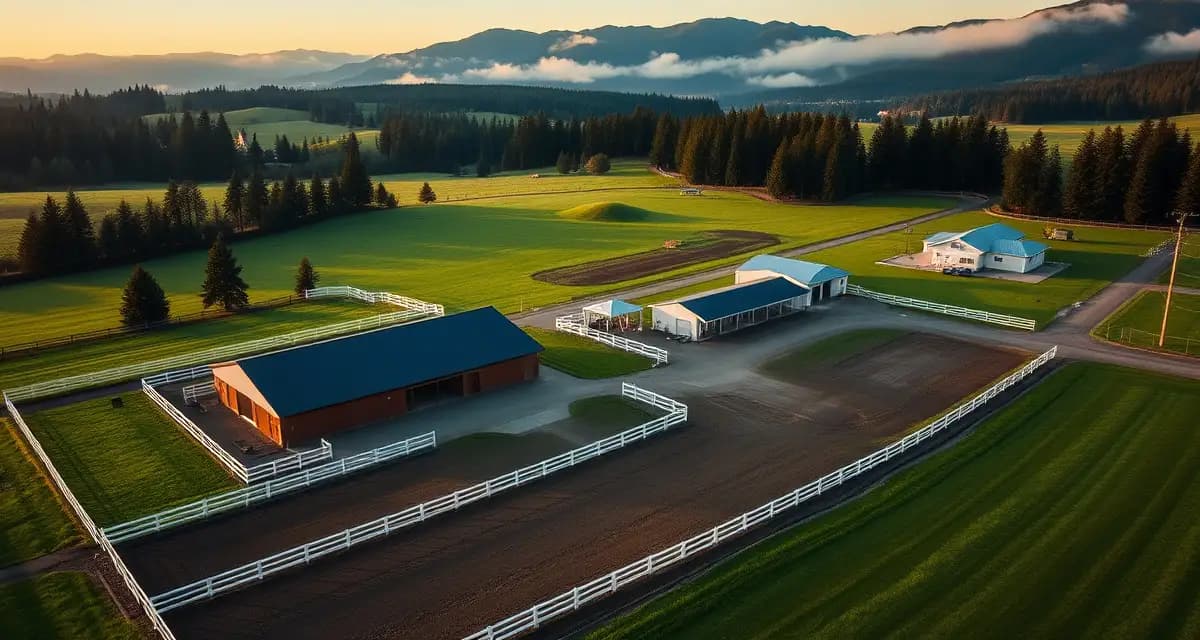
Equine Facilities in Oregon
Oregon's equestrian landscape is as varied as its geography. From the rainy western valleys to the high desert of eastern Oregon, the state supports a wide range of horse operations, and the management challenges differ dramatically depending on which side of the Cascades you're on.
The Willamette Valley and Western Oregon
The Willamette Valley between Portland and Eugene has the highest concentration of equine facilities in the state. The valley's mild temperatures and access to major population centers make it ideal for boarding barns, lesson programs, and competitive training facilities. The drawback is the rain: western Oregon typically receives sixty to one hundred inches of rainfall annually in the wettest locations, and mud management is a year-round operational challenge.
Facilities in this region invest heavily in outdoor footing. Well-drained sacrifice areas, gravel paddocks, and covered runs allow horses to have daily movement without destroying pastures during the long wet season from October through May. Hoof care is more intensive in wet conditions, with thrush and white line disease requiring proactive management in horses kept on wet ground.
Portland's suburban equestrian market is competitive and client expectations are high. Facilities in Washington County, Clackamas County, and the Tualatin Valley serve an educated, often affluent client base that expects professional communication and detailed care reporting.
Eastern Oregon and High Desert Operations
East of the Cascades, the climate is completely different. Bend and central Oregon have become significant equestrian centers, particularly for western disciplines and trail riding. The high desert climate is drier, sunnier, and colder in winter than the Willamette Valley. Facilities here deal with different challenges: frozen water systems in winter, dust management in summer, and longer distances between veterinary services.
The Pendleton area in northeast Oregon has a strong rodeo tradition anchored by the Pendleton Round-Up, one of the most storied rodeos in the country. Ranch horses, rope horses, and barrel horses are the dominant horse types in this region. Facilities serving working ranch operations and rodeo athletes operate on different terms than those serving recreational riders.
Southeast Oregon is genuinely remote. The Burns, Lakeview, and Jordan Valley areas have ranches with large horse populations, but dedicated equine facilities in the commercial boarding sense are rare. Horses here are tools of land management.
Regulatory and Land Use Considerations
Oregon has some of the most complex land use regulations in the country. The statewide land use planning system, administered through DLCD, affects what can be built and how land can be used in agricultural and rural zones. Equine facilities generally qualify as agricultural uses, but any expansion, new building, or change in use may trigger planning reviews.
Environmental permits for facilities with significant horse populations may be required under the state's Concentrated Animal Feeding Operation rules, depending on horse numbers and acreage. Working with your county planning office before building infrastructure is advisable.
Facility Management in a Wet Climate
Western Oregon barn managers develop specific practices for wet climate management. Covered arenas are nearly essential for year-round programs. Hay storage must be completely covered, as even briefly wet hay can mold in the valley's humid conditions. Bedding management in stalls matters for hoof health when horses stand in wet conditions.
A management system like BarnBeacon helps barn managers track daily hoof observations, document farrier visits, and flag recurring health issues that may be related to wet conditions. When you have ten to forty horses under wet management, pattern recognition across the herd becomes more valuable than case-by-case reactions.
Disciplines and Community
Western Oregon has a strong English riding community, including competitive hunter/jumper, dressage, and eventing programs. The Pacific Northwest Dressage Society and various jumper circuits maintain active competition calendars. Trail riding is enormously popular, with access to the Coast Range, Cascades, and Mount Hood National Forest from Willamette Valley facilities.
Eastern Oregon's disciplines lean western, with the rodeo tradition, working ranch horse, and endurance riding all well represented. The Oregon Endurance Riders Association is one of the more active endurance riding groups in the West.
For related guidance, see pasture rotation management and scheduling tools.
FAQ
What is Equine Facilities in Oregon?
Equine facilities in Oregon encompass a broad range of horse operations across the state, from boarding barns and lesson programs in the Willamette Valley to working ranches and trail operations in the high desert of eastern Oregon. The state's varied geography—wet western valleys, the Cascade Range, and arid eastern plains—means facilities are built and managed to suit dramatically different climates, horse populations, and owner needs.
How much does Equine Facilities in Oregon cost?
Costs vary widely depending on region, facility type, and services offered. Full-care boarding in the Portland metro area and Willamette Valley typically runs $600–$1,200 per month, reflecting high land costs and client expectations. Eastern Oregon and rural areas tend to offer lower rates, often $300–$600 for full care. Partial or pasture board is less expensive. Additional services like training, lessons, and specialized care add to the monthly total.
How does Equine Facilities in Oregon work?
Oregon equine facilities operate by providing stabling, turnout, feed, and care for horses on a boarding or ownership basis. Western Oregon facilities focus heavily on mud management, covered turnout, and intensive hoof care due to the wet climate. Eastern Oregon operations manage drought conditions, grazing rotation, and dust control. Most facilities coordinate farrier and veterinary visits, maintain feeding schedules, and offer varying levels of owner access and amenity.
What are the benefits of Equine Facilities in Oregon?
Oregon's equine facilities give horse owners access to professional care, safe infrastructure, and climate-appropriate management without bearing the full cost of owning land and buildings. In wet western Oregon, managed facilities prevent the pasture destruction and hoof problems that come with poor drainage. In the east, facilities provide reliable water, shelter, and feed through harsh winters. Competitive training barns offer structured programs, quality footing, and access to experienced trainers and coaches.
Who needs Equine Facilities in Oregon?
Oregon equine facilities serve recreational riders, competitive equestrians, breeders, working ranchers, and horse owners without land. Suburban owners in the Portland, Salem, and Eugene areas rely on boarding facilities to keep horses close to home. Trail riders and casual owners in rural areas may seek pasture board. Competitive riders in disciplines like dressage, jumping, and reining need training barns with appropriate arenas, footing, and professional instruction.
How long does Equine Facilities in Oregon take?
There is no set timeline—equine facilities in Oregon serve horses and owners on an ongoing basis. Boarding arrangements are typically month-to-month or annual contracts. Construction or renovation of a new facility, including permits, drainage work, arena installation, and barn construction, commonly takes one to three years depending on scope and county regulations. Finding the right facility for your horse can take weeks to months of touring, vetting, and waitlist navigation.
What should I look for when choosing Equine Facilities in Oregon?
Look for climate-appropriate infrastructure: in western Oregon, prioritize covered arenas, well-drained paddocks, and sacrifice areas to manage the long wet season. In eastern Oregon, assess water reliability, shade, and windbreaks. Evaluate hoof care protocols, feeding quality, and staff experience. Check turnout space, pasture management practices, and safety standards. Ask about veterinary and farrier access, emergency protocols, and how the facility handles sick or injured horses.
Is Equine Facilities in Oregon worth it?
For most Oregon horse owners without acreage, a well-run equine facility is absolutely worth it. Professional management reduces the risk of costly health problems from poor footing, inadequate nutrition, or missed care. In western Oregon specifically, proper drainage and hoof management infrastructure is difficult and expensive to replicate at home. Quality facilities also provide community, instruction, and competitive opportunities that isolated private ownership cannot. Weigh the monthly cost against the full expense of DIY land and infrastructure.