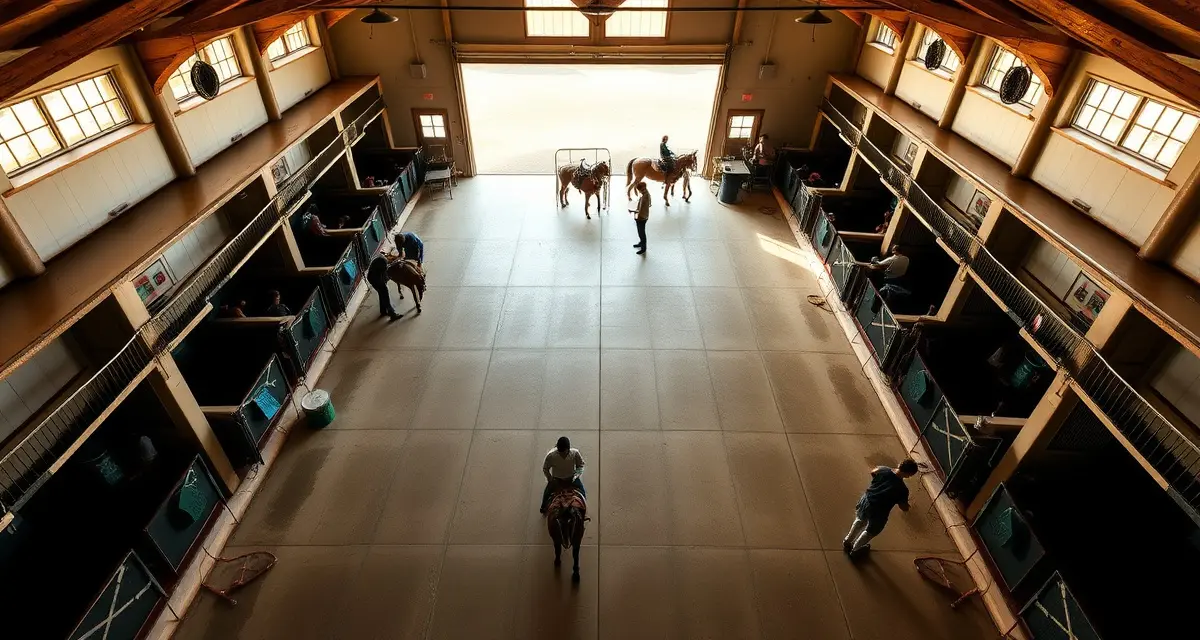
Complete Guide to Polo Barn Operations
Running a polo facility is a distinct discipline within equine management. The combination of high horse-to-rider ratios, intense physical demands on the horses, sophisticated clientele, and seasonal peak operations creates a management environment that rewards detailed systems and professional staff.
Facility Requirements
A polo facility needs to support several specific functions that most boarding barns don't require.
Practice and playing fields: Maintained polo fields require significant acreage and regular grooming. A standard polo field is approximately 300 yards by 160 yards. Field care includes mowing, dragging, irrigation in dry climates, and divot repair after every chukker. Facilities that share field maintenance with outside contractors or local clubs need clear agreements about scheduling, maintenance costs, and field availability.
Arena for stick and ball: An enclosed arena or practice area for individual and small-group stick-and-ball work is essential for conditioning during non-playing weather and for player skill development. The arena doesn't need to be full-sized polo field dimensions; a 100x200 foot space works for individual practice.
Multiple paddocks and turnout areas: With large horse rosters, polo facilities need substantial turnout acreage divided into manageable groups. Horses that spend long hours in stalls without turnout decline in condition and temperament over a season.
Wash racks: Multiple wash racks are essential. Post-play bathing of multiple horses simultaneously requires the physical infrastructure to support it.
Tack and equipment storage: Polo requires more equipment per horse than most disciplines. Each horse needs multiple saddles, a set of leg wraps per play, halters, lead ropes, bandages, and specialized polo gear. Organized, accessible equipment storage reduces the time cost of tacking up strings and prevents equipment from going missing in a busy barn.
Staff Structure
A polo barn requires more staff per horse than a typical boarding facility. The standard ratio in high-end polo operations is approximately one skilled groom per four to five horses. During tournament season, additional temporary help is common.
Groom hiring and management is one of the most challenging aspects of polo barn operation. Skilled polo grooms, particularly those who understand wrapping techniques, cooling methods, and the pace of game-day management, are in short supply. Many polo barns employ grooms who travel with the seasonal circuit.
Staff hierarchy matters: head groom, regular grooms, and any exercise riders need clear role definitions and accountability. A management system that assigns tasks and tracks completion keeps the morning and afternoon routines on track even when staff levels change.
Horse Health and Performance Monitoring
Polo ponies are performance athletes, and their health monitoring should reflect that. Baseline vital signs, weight tracking, and observation logs for each horse create the reference data that makes subtle changes visible.
Hoof care is critical. Polo ponies need frequent farrier attention because the playing surface and the intensity of movement are hard on feet. In most serious polo operations, the farrier visits every four to six weeks.
Lameness surveillance should be proactive rather than reactive. Subtle changes in gait, reluctance to turn a particular direction, or changes in behavior under saddle can be early signs of a developing issue. Grooms who know each horse well and log observations consistently are your first line of detection.
BarnBeacon supports daily health observation logging that allows staff to note and flag changes as they occur, with owner notification built in so that players know immediately when their horses show any concern.
Managing Multiple Owners
Polo facilities often have horses from multiple owners, each of whom may have strong opinions about their horses' management. Some polo players are very hands-on and want daily updates. Others are present only on game days and trust the barn manager completely.
Adapting your communication style and frequency to each owner's preferences, while maintaining consistent underlying records for all horses, is a management skill that pays off in client retention and satisfaction.
Clear billing for a facility with multiple owners and horses in various playing strings requires careful per-horse charge tracking. Game day expenses, veterinary calls, and equipment costs that apply to individual horses need to be billed accurately.
Game Day Operations
Game day at a polo facility is the most logistically demanding day of the week. Horses need to be ready in the right order for chukkers, cooled and bandaged between chukkers, and properly cared for after the match. A clear game day checklist and assigned roles for each staff member make the difference between a smooth operation and a chaotic one.
For related reading, see polo barn operations and scheduling task management.
FAQ
What is Complete Guide to Polo Barn Operations?
A complete guide to polo barn operations is a comprehensive resource covering the systems, staffing, and facility requirements needed to run a professional polo facility. It addresses the unique challenges of managing high horse-to-rider ratios, maintaining polo fields, coordinating seasonal play schedules, and serving sophisticated clientele—combining equine care expertise with the operational demands specific to the polo discipline.
How much does Complete Guide to Polo Barn Operations cost?
This is an informational guide, so there is no direct cost to read it. However, operating a polo facility itself involves significant investment: field maintenance equipment, arena construction, paddock infrastructure, and professional staffing all carry substantial costs. Facilities also budget for regular field grooming, irrigation systems, and divot repair after every chukker, making polo barn operations among the more capital-intensive segments of equine management.
How does Complete Guide to Polo Barn Operations work?
A polo barn operation works by integrating field management, horse care, player services, and scheduling into coordinated daily systems. Staff maintain playing and practice fields, manage large horse rosters across multiple paddocks, and support horses through the intense physical demands of chukker play. Seasonal peak periods require advance planning for staffing, field availability, and horse conditioning cycles to keep operations running smoothly.
What are the benefits of Complete Guide to Polo Barn Operations?
Following structured polo barn operations practices helps reduce costly mistakes, improve horse welfare, and deliver a professional experience to high-expectation clientele. Clear systems for field scheduling, horse rotation, and staff responsibilities prevent conflicts, minimize injuries, and ensure fields remain playable. Well-run operations also build the reputation needed to attract and retain serious players and well-bred horses.
Who needs Complete Guide to Polo Barn Operations?
Anyone involved in managing, owning, or staffing a polo facility benefits from this guide. That includes barn managers transitioning from general equine boarding, new polo facility owners, head grooms overseeing large horse rosters, and club administrators handling field scheduling. Players investing in private string management or shared facilities will also find the operational context useful for understanding what professional polo barn management entails.
How long does Complete Guide to Polo Barn Operations take?
Reading the guide takes roughly 20–30 minutes, but implementing the systems described is an ongoing process. Field maintenance routines are daily and seasonal. Staff training, paddock management, and player coordination evolve over months and years of operation. Polo facilities typically require a full season of hands-on experience before operational rhythms become well-established and staff can manage peak periods with consistent efficiency.
What should I look for when choosing Complete Guide to Polo Barn Operations?
Look for coverage of the specific operational challenges polo creates: field grooming schedules, stick-and-ball arena setup, high horse-to-rider ratio management, and seasonal planning. A strong guide should address staffing ratios, turnout logistics for large rosters, and client service expectations. Practical detail matters more than general equine advice—polo barn management differs meaningfully from standard boarding, so the guidance should reflect those distinctions directly.
Is Complete Guide to Polo Barn Operations worth it?
If you operate or plan to operate a polo facility, yes—structured operational guidance is genuinely valuable. Polo's physical demands on horses, the complexity of field maintenance, and the expectations of experienced players leave little room for improvisation. Managers who invest time in building sound systems see fewer costly breakdowns, healthier horses, and stronger client retention. The return on understanding polo-specific operations is practical and measurable.