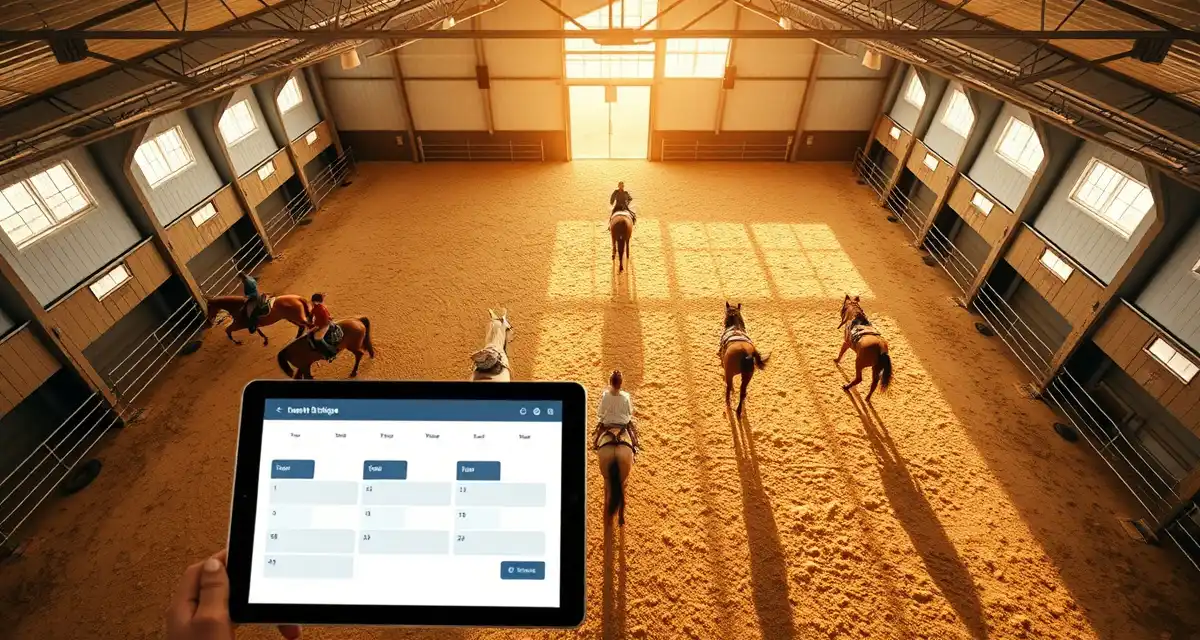
Reining Barn Scheduling: Complete Guide for Facility Managers
NRHA memberships grew 18% from 2022 to 2025 in North America, and the training and competition schedules behind that growth create scheduling demands at reining facilities that require more than a shared calendar. Pattern training for multiple horses at different development stages, joint maintenance protocols that affect daily ride scheduling, and the NRHA competition calendar with its fixed major events all need to be managed in an integrated system.
TL;DR
- Scheduling conflicts between farrier, vet, trainer, and lesson slots are the most common source of daily operational friction at equine facilities
- Digital scheduling tools visible to all staff prevent the double-booking that wastes professional visit time
- Lesson scheduling tied to horse health records lets managers pull a horse from lessons when health status changes
- Arena scheduling software reduces in-person disputes and eliminates the whiteboard conflicts common at multi-use facilities
- Automated reminders reduce no-shows for lessons and appointments by giving clients advance notice
- Connecting scheduling to billing captures lesson and training revenue that is commonly missed in manual systems
This guide covers how to build a scheduling approach at a reining facility that handles these specific demands.
The Scheduling Logic of Reining Facilities
Pattern-focused training sessions. Reining training isn't just riding: it's building specific maneuver quality through deliberate, often repetitive pattern work. Scheduling when each horse does pattern work (vs. conditioning rides, light hacking, or rest) requires understanding each horse's current development state and the physical demands of the maneuvers on that specific horse.
Arena footing requirements. Pattern work in reining requires specific arena conditions: consistent footing that allows controlled sliding without hazard. Scheduling multiple horses in a deep-footing arena requires sequencing that avoids over-working the footing before maintenance can be done.
Joint maintenance and recovery. Horses that receive joint injections or other maintenance treatments typically have a post-treatment light work or rest protocol. Those protocols need to be visible in the training schedule so that rides aren't planned during restricted periods.
Futurity and derby preparation timelines. For three-year-olds pointing toward the NRHA Futurity, the training timeline has specific milestones. Scheduling the development program backward from the Futurity date creates a framework for each horse's weekly schedule.
Show season scheduling. During NRHA show season, the competition calendar drives the training schedule. Horses preparing for specific events need elevated pattern work intensity in the weeks before. Post-show recovery needs to be built in.
Frequently Asked Questions
How do reining barn managers handle scheduling?
Reining barn scheduling involves coordinating pattern training sessions, joint maintenance appointments, and show travel logistics across a daily calendar that leaves little margin for error. Most experienced reining managers build scheduling around horse welfare first, working backward from competition dates and training milestones to structure the daily and weekly work calendar.
What tools do reining facilities use for scheduling?
Digital scheduling tools visible to all staff replace the whiteboard conflicts and double-bookings that plague manually managed reining barns. BarnBeacon's scheduling module connects arena time, farrier appointments, vet visits, and lesson slots in one calendar. When a horse's health status changes, their scheduled activities can be updated immediately and all relevant staff are notified.
What are the scheduling challenges at reining barns?
Reining facilities face scheduling complexity from the combination of show season demands, joint maintenance appointments that require precise timing around competition dates, and the futurity preparation calendar that drives the entire training year. Managing those competing demands without a system that gives all staff visibility into the same calendar leads to conflicts, missed appointments, and wasted professional visit time.
How does BarnBeacon compare to spreadsheets for barn management?
Spreadsheets require manual updates, lack real-time notifications, and create version control problems when multiple staff members are working from different files. BarnBeacon centralizes records, pushes alerts automatically based on logged events, and connects care records to billing and owner communication in one system. Most facilities report saving several hours per week after switching from spreadsheets.
What is the setup process like for BarnBeacon?
Most facilities complete the initial setup in under a week. Horse profiles, service templates, and billing configurations can be imported from existing records or entered directly. BarnBeacon's US-based support team is available to assist with setup, and most managers are running their first billing cycle through the platform within days of starting.
Can BarnBeacon support a barn with multiple staff members?
Yes. BarnBeacon supports multiple user accounts with role-based access, so barn managers, barn staff, and owners each see the information relevant to their role. Task assignments, completion logs, and communication history are all attached to the barn's account rather than to individual staff phones or email addresses.
What is Reining Barn Scheduling: Complete Guide for Facility Managers?
Reining Barn Scheduling: Complete Guide for Facility Managers is a comprehensive resource designed to help equine facility managers build integrated scheduling systems tailored to reining operations. It covers managing pattern training for horses at different development stages, coordinating farrier and vet visits, handling joint maintenance protocols that affect ride schedules, and aligning daily operations with the NRHA competition calendar. The guide addresses the specific demands that have grown alongside the 18% NRHA membership increase from 2022 to 2025.
How much does Reining Barn Scheduling: Complete Guide for Facility Managers cost?
This guide is free educational content published on BarnBeacon. There is no cost to access the article. It provides practical scheduling frameworks and strategies that facility managers can implement using their existing tools or dedicated barn management software. If you choose to adopt a digital scheduling platform based on the guide's recommendations, costs will vary depending on the software provider and the size of your facility.
How does Reining Barn Scheduling: Complete Guide for Facility Managers work?
The guide works by walking facility managers through the key scheduling challenges unique to reining barns, including coordinating multiple professionals, managing arena time, and tying horse health records to lesson availability. It recommends using digital scheduling tools visible to all staff, setting up automated client reminders, and connecting scheduling to billing systems so no lesson or training session goes unrecorded. Each recommendation is grounded in the operational realities of a working reining facility.
What are the benefits of Reining Barn Scheduling: Complete Guide for Facility Managers?
The primary benefits include eliminating double-booking of farrier, vet, and trainer slots, reducing client no-shows through automated reminders, and preventing arena disputes with shared digital scheduling. Linking horse health records to lesson schedules allows managers to pull horses from work when their status changes. Connecting scheduling to billing captures revenue that is routinely lost in manual systems, making operations more efficient and financially tighter across the entire facility.
Who needs Reining Barn Scheduling: Complete Guide for Facility Managers?
This guide is built for managers and owners of reining-focused equine facilities, including training barns, competition prep facilities, and multi-use arenas with a reining program. It is also useful for head trainers who carry scheduling responsibilities, barn administrators managing staff and client coordination, and any facility experiencing growth tied to the expanding NRHA membership base that needs a more structured operational approach than a shared calendar or whiteboard.
Related Articles
- Eventing Barn Scheduling: Complete Guide for Facility Managers
- Hunter/Jumper Barn Scheduling: Complete Guide for Facility Managers
- Polo Barn Scheduling: Complete Guide for Facility Managers
Sources
- American Association of Equine Practitioners (AAEP)
- National Reining Horse Association (NRHA)
- American Horse Council
- UC Davis Center for Equine Health
- Penn State Extension Equine Program
Get Started with BarnBeacon
Running a reining facility well requires the right tools behind the right protocols. BarnBeacon gives managers the health record tracking, billing automation, and owner communication infrastructure to operate efficiently without adding administrative staff. Start a free trial and see how the platform fits the way your barn already works.