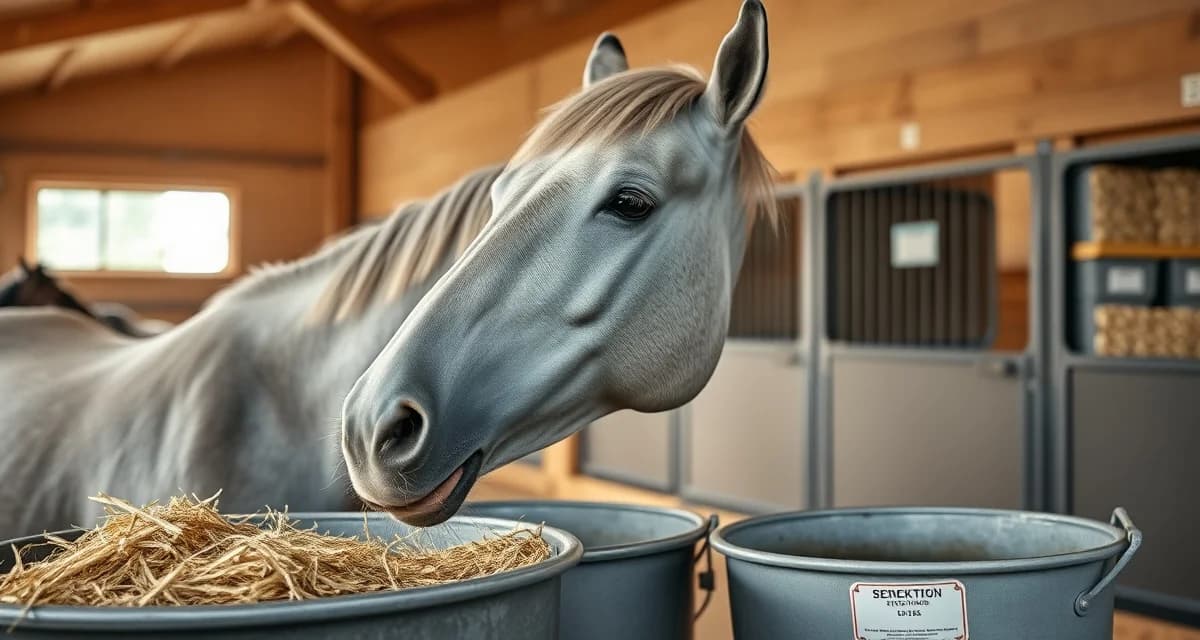
Senior Horse Feeding in a Boarding Barn: Special Protocols
Feed errors are the #2 cause of preventable colic according to AAEP 2023 data. For senior horses, the margin for error is even smaller. Managing a 28-year-old PPID horse on soaked hay and a senior pelleted feed is a fundamentally different task than feeding a healthy 10-year-old, and most barns are still trying to handle both with the same system.
TL;DR
- Feed errors are the #2 cause of preventable colic per AAEP 2023 data; senior horses have even less margin for error.
- Every senior horse needs a digital feed card that updates in real time and is accessible to all staff on mobile.
- Hay soaking prep (30-60 minutes) must be built into the feeding schedule itself, not left as an afterthought.
- All feed change requests should go through a documented written channel with at least 24 hours notice.
- Quarterly feed reviews are recommended for any horse over 20 to catch condition changes before they become critical.
The problem isn't that barn staff don't care. It's that the information doesn't reach them clearly, consistently, or in time to matter.
Why Senior Horse Feeding Breaks Down at the Barn Level
Senior horses often have layered dietary needs: dental compromise, metabolic conditions, weight management issues, and supplement stacking. Each of these requires specific handling that changes over time as the horse ages or as the vet adjusts the plan.
When that information lives in a notebook, a whiteboard, or a spreadsheet, it becomes stale fast. A new part-time employee on a Saturday morning shouldn't have to guess whether the bay gelding in stall 12 gets his hay soaked or dry.
BarnBeacon solves this by generating individual feed cards for each horse that are visible to all staff on mobile and update in real-time. When the vet calls on a Tuesday and changes the protocol, every person feeding that horse on Wednesday morning sees the updated instructions automatically.
Step 1: Conduct a Baseline Dietary Assessment for Each Senior Horse
What to Capture at Intake or Annual Review
For any horse over 18, document the following before building a feed plan:
- Current body condition score (BCS)
- Dental status and date of last float
- Any diagnosed conditions (Cushing's/PPID, EMS, gastric ulcers)
- Current hay type, quantity, and preparation method (soaked vs. dry)
- Concentrate type, brand, and amount per feeding
- Supplements with exact doses and timing
- Water intake concerns or preferences
This baseline becomes the foundation of the horse's feed card. Without it, you're relying on verbal handoffs, which fail.
Who Should Be Involved
The barn manager, the horse owner, and ideally the attending vet should all confirm the initial protocol. Get it in writing. A signed feed authorization form protects the barn and ensures the owner can't later claim the diet was wrong.
Step 2: Build a Feed Card That Every Staff Member Can Read and Follow
A feed card is only useful if it's specific enough to act on without asking questions. Vague instructions like "senior feed, twice daily" create room for error.
What a Strong Senior Horse Feed Card Includes
- Feeding times (e.g., 7:00 AM and 5:00 PM, not just "AM/PM")
- Hay type, flake count or weight, and whether it needs soaking and for how long
- Concentrate name, brand, and exact scoop or gram measurement
- Each supplement listed separately with dose and whether it goes in wet or dry feed
- Any medications that are feed-administered (and cross-reference with your medication tracking system)
- Flags for conditions that affect feeding (e.g., "PPID - no pasture access before 10 AM")
- Date of last update and who authorized the change
Paper feed cards get wet, torn, and ignored. Digital feed cards that update in real-time and display on a phone at the stall door get used.
Step 3: Implement Soaked Hay and Wet Feed Protocols
When Soaking Is Required
Horses with significant dental wear, missing teeth, or choke history often need hay soaked for 30 to 60 minutes before feeding. Some need hay cubes or chopped forage entirely. This step is easy to skip when a barn is busy and staff are rushing through morning feed.
The protocol needs to be built into the feeding schedule itself, not treated as an afterthought. If a horse's hay needs to soak for 45 minutes before the 7:00 AM feed, that task needs to start at 6:15 AM. Your feeding schedules should account for prep time, not just delivery time.
Managing Wet Feed in Winter
Soaked hay and wet senior feeds freeze in cold weather. Barns in northern climates need a winter protocol that accounts for this: smaller soaking batches, warmer water, and adjusted timing. Document this as a seasonal variation on the feed card so staff don't have to figure it out on a 10-degree morning.
Step 4: Create a Communication System for Owner-Requested Changes
The Biggest Source of Feed Errors in Boarding Barns
Owner-requested changes are where senior horse feeding protocols most often break down. An owner calls on a Monday, asks to switch from one senior feed to another, and the barn manager relays it verbally to the afternoon staff. By Wednesday, two feeders are using the old bag and one is using the new one.
Every feed change request should go through a documented channel. That means a written request, a confirmed update to the feed card, and a notification to all staff who feed that horse.
Spreadsheets can't alert when feed changes are pending. Tools that require manual updates create a lag between the change request and the actual protocol update. That lag is where errors happen.
Setting Owner Expectations
Owners of senior horses are often highly involved and sometimes anxious. Set clear policies: feed changes require 24-hour notice, all changes must be submitted in writing (email or through your barn management platform), and no verbal-only changes will be honored.
This isn't bureaucracy. It's protection for the horse.
Step 5: Monitor and Adjust Regularly
Quarterly Feed Reviews for Senior Horses
A senior horse's needs change faster than a younger horse's. A horse that was maintaining weight well in spring may drop condition by fall. Build quarterly feed reviews into your barn calendar for any horse over 20.
At each review, reassess BCS, check in with the owner about vet visit findings, and update the feed card accordingly. Document what changed and why.
Tracking Consumption
If a senior horse is leaving feed, that's a clinical signal. Staff need a simple way to flag incomplete meals without it getting lost. A notation system tied to the feed card, rather than a separate log, keeps the information where it's most useful.
Common Mistakes in Senior Horse Feeding at Boarding Barns
Using one feed card format for all horses. Senior horses need more detail. A standard feed card built for a healthy adult horse won't capture the nuance required.
Failing to update cards after vet visits. Owners often leave a vet appointment with new instructions and forget to notify the barn until the next visit. Build a reminder into your intake process: "Please notify us within 24 hours of any vet-recommended diet change."
Treating supplements as optional. For a horse managing Cushing's or EMS, a missed supplement dose isn't a minor inconvenience. Staff need to understand why each supplement is on the card, not just that it's there.
Ignoring water intake. Senior horses are more prone to impaction colic, especially in winter. Feed cards should note any concerns about water consumption and flag horses that may need electrolyte supplementation or heated water access.
How do I manage feeding schedules for 30+ horses?
The only way to manage feeding schedules at scale without errors is to move away from paper and verbal systems entirely. Each horse needs a digital feed card that staff can access at the stall. Group horses by feeding time and prep requirements so staff can work efficiently without cross-referencing multiple documents. Automated reminders for prep tasks (like soaking hay) reduce the chance that steps get skipped during busy morning feeds.
What should a horse feed card include?
A complete feed card includes feeding times, hay type and preparation method, concentrate name and exact measurement, each supplement with dose and timing, any feed-administered medications, condition flags that affect feeding, and the date of the last authorized update. For senior horses, add dental status notes and any seasonal protocol variations. The card should be specific enough that a new staff member can follow it correctly on their first day without asking questions.
How do I handle owner-requested feed changes across a whole barn?
Establish a written-only policy for feed change requests and set a minimum notice period of 24 hours. When a change is approved, update the feed card immediately and ensure all staff who feed that horse receive notification before the next feeding. Avoid verbal relay chains. Old horse diet management in a barn environment depends on every person feeding from the same current information, not from what they remember being told last week.
How do I handle a senior horse that refuses to eat its senior feed?
First confirm the feed is fresh and not stale or moldy. Senior horses with dental pain sometimes refuse hard pellets; soaking the feed in warm water for 10-15 minutes can improve palatability significantly. If refusal persists across multiple feedings, document the pattern in your health log and notify the owner the same day so the attending vet can be consulted before the issue affects body condition.
When should I require a vet consultation before changing a senior horse's feed protocol?
Any feed change involving a horse with a diagnosed metabolic condition (PPID, EMS, gastric ulcers) should involve vet sign-off before implementation. For horses without active diagnoses, a change in hay type or concentrate brand initiated at the owner's request can generally proceed with documented owner authorization. The threshold is lower for horses over 25, where even modest dietary changes can have outsized effects on condition and gut motility.
Related Articles
- Boarding Barn Feeding Schedule Software for Horse Facilities
- Retirement Barn Billing: Senior Horse Boarding Fees
FAQ
What is Senior Horse Feeding in a Boarding Barn: Special Protocols?
Senior horse feeding protocols in a boarding barn are structured systems for managing the unique dietary needs of horses typically aged 20 and older. These protocols address layered challenges like dental compromise, metabolic conditions such as PPID, weight management, and supplement stacking. They include real-time digital feed cards, soaked hay schedules, documented feed change processes, and quarterly condition reviews. The goal is ensuring every staff member has accurate, up-to-date feeding instructions so errors are minimized and senior horses receive consistent, appropriate care.
How much does Senior Horse Feeding in a Boarding Barn: Special Protocols cost?
Implementing senior horse feeding protocols doesn't have a fixed price—costs depend on your barn's size and current systems. Upgrading to digital feed management software may run from free basic tools to several hundred dollars per year for full-featured platforms. Labor costs increase slightly due to hay soaking prep time and documentation. However, the cost of a preventable colic episode—veterinary bills, lost boarding revenue, and horse welfare—far exceeds the investment in a proper protocol system.
How does Senior Horse Feeding in a Boarding Barn: Special Protocols work?
A senior horse feeding protocol works by centralizing each horse's dietary plan into a digital feed card accessible to all staff on mobile devices. It builds hay soaking windows (30–60 minutes) into the schedule rather than treating them as afterthoughts. Feed change requests go through a documented written channel with at least 24 hours notice. Quarterly reviews flag condition changes early. The system replaces verbal handoffs and paper notes with a consistent, real-time information flow that reaches staff before feeding time.
What are the benefits of Senior Horse Feeding in a Boarding Barn: Special Protocols?
Proper senior feeding protocols reduce the risk of feed-related colic, one of the top preventable health emergencies in boarding barns. They ensure horses with PPID, insulin dysregulation, or dental issues receive correctly prepared feed every time. Staff confidence improves when instructions are clear and accessible. Owners gain peace of mind knowing their horse's complex needs are met consistently. Barns benefit from fewer emergency vet calls, stronger client retention, and a professional reputation for handling special-needs horses well.
Who needs Senior Horse Feeding in a Boarding Barn: Special Protocols?
Any boarding barn housing horses aged 20 and older needs senior-specific feeding protocols. This is especially critical for barns with horses managing PPID, Cushing's disease, insulin dysregulation, poor dentition, or chronic weight issues. Barns with high staff turnover or multiple part-time feeders are particularly vulnerable to errors without structured protocols. If even one horse in your barn requires soaked hay, a senior pelleted feed, or timed supplements, a formal protocol system is warranted.
How long does Senior Horse Feeding in a Boarding Barn: Special Protocols take?
Building and running senior feeding protocols is an ongoing process, not a one-time task. Initial setup—creating digital feed cards, documenting current diets, and scheduling soaking windows—typically takes a few hours per horse. Staff training adds another session upfront. Day-to-day, hay soaking adds 30–60 minutes of prep per affected horse per feeding. Quarterly feed reviews take 15–30 minutes per horse. The time investment is modest compared to the hours lost managing a colic or addressing a weight crisis caught too late.
What should I look for when choosing Senior Horse Feeding in a Boarding Barn: Special Protocols?
Look for a system that supports real-time updates accessible on mobile so all staff see the same information. It should accommodate complex instructions—soaking times, supplement order, texture modifications—not just feed quantities. A documented change-request workflow with time-stamping is essential. The best protocols integrate with your scheduling so soaking prep is built in, not forgotten. Seek platforms or processes that flag horses due for condition reviews and maintain a log of feed changes for veterinary reference.
Is Senior Horse Feeding in a Boarding Barn: Special Protocols worth it?
Yes—for any barn managing senior horses, especially those with metabolic or dental conditions, structured feeding protocols are worth it. Feed errors are the second leading cause of preventable colic per AAEP 2023 data, and senior horses have less physiological reserve to recover from mistakes. A protocol system pays for itself by preventing even one serious health event. Beyond economics, it's a welfare issue: senior horses thrive on consistency, and a reliable system is the most dependable way to deliver it.
Sources
- American Association of Equine Practitioners (AAEP)
- Kentucky Equine Research
- University of Minnesota Extension Equine Program
- Equine Sciences Academy
- The Horse magazine
Get Started with BarnBeacon
Senior horse feeding protocols require information that updates in real time and reaches every staff member who touches that horse -- not paper cards that get wet and outdated. BarnBeacon generates individual feed cards for each horse that are accessible on mobile, update instantly when the vet changes a protocol, and create a timestamped record of every feeding. If your barn is managing multiple senior horses with layered dietary needs, BarnBeacon gives your team the tools to follow those protocols correctly every day.