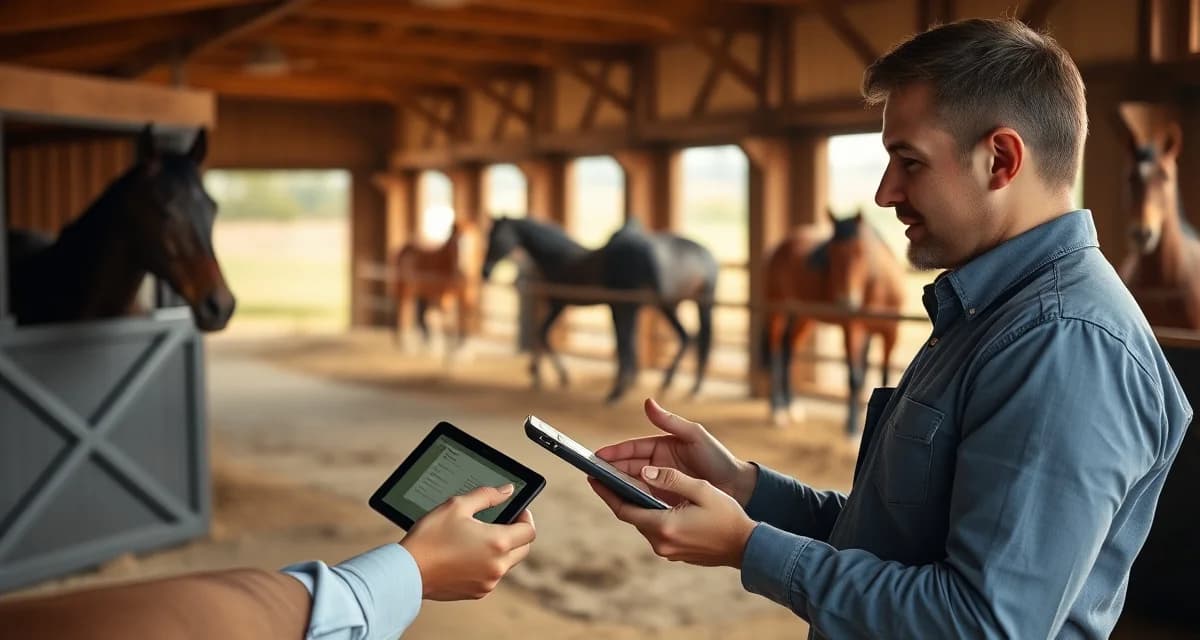
Trail Riding Barn Owner Communication: FAQ for Managers
Trail-riding barn owner communication sits at the intersection of logistics, liability, and trust. Unlike boarding or training facilities, trail riding operations involve rotating groups of horses, variable ride schedules, and owners who may not be on-site when their horse goes out. Generic barn software was not built for that reality.
TL;DR
- Trail riding facilities manage a unique combination of guided ride scheduling, horse-rider matching, and terrain-specific health monitoring.
- Pre-ride and post-ride health checks for horses in trail programs should be documented individually, not assessed as a group.
- Rider ability assessments at intake are both a safety requirement and a liability protection measure for trail operations.
- Route and conditions logging after each ride creates a record that supports horse welfare audits and injury investigations.
- Owner Communication management at trail facilities requires tools that reflect the episodic, variable nature of trail ride operations.
Why Trail Riding Facilities Have Unique Communication Needs
Most barn management platforms assume a relatively static environment: a horse in a stall, a regular lesson schedule, a monthly board invoice. Trail riding facilities operate differently. Horses rotate through ride assignments, trail conditions change daily, and owners need real-time updates on where their horse went, how it performed, and whether anything came up on the trail.
That gap between what generic tools offer and what trail riding managers actually need creates real problems. Missed updates lead to frustrated owners. Undocumented incidents create liability exposure. And managers end up spending hours on phone calls and texts that a purpose-built system could handle automatically.
BarnBeacon was built specifically to close that gap, giving trail riding facility managers tools that match how their operations actually run.
What Makes Owner Communication at Trail Riding Barns Different
Trail riding equine facility owner communication involves several layers that other disciplines simply do not have.
Ride assignment notifications. Owners want to know when their horse is scheduled, which trail it will cover, and who the guide is. That information changes frequently and needs to reach owners before the ride, not after.
Post-ride condition reports. After a trail ride, owners expect a summary: how the horse moved, whether it showed any soreness, hydration status, and any behavioral notes. At a 30-horse facility running multiple rides per day, doing this manually is not sustainable.
Incident and observation logging. Trail rides expose horses to unpredictable terrain, wildlife, and weather. When something happens out on the trail, the documentation needs to be immediate and shareable with the owner the same day.
Billing tied to usage. Unlike flat-rate board, many trail riding facilities bill per ride or per hour. Owners need transparent records that match what they are being charged, and managers need those records to be accurate without manual reconciliation.
For a deeper look at how these operational layers connect, see trail riding barn operations for a full breakdown of facility management workflows.
How do trail riding barn managers handle owner communication?
Most trail riding barn managers rely on a combination of text messages, phone calls, and paper logs, which works at very small scale but breaks down quickly as the facility grows. The most effective approach is a centralized system that automates ride notifications, captures post-ride reports in a structured format, and delivers updates to owners through a single channel they can reference at any time. Managers who move to purpose-built barn management software report spending significantly less time on reactive communication and more time on actual facility operations. The key is replacing ad hoc messaging with documented, timestamped records that both the manager and owner can access.
What software do trail riding barns use for owner communication?
Most trail riding facilities start with general-purpose tools like group texts, email chains, or generic barn management platforms that were designed for boarding or training operations. Those tools lack the ride-specific data fields, post-ride reporting templates, and usage-based billing features that trail riding operations require. BarnBeacon is purpose-built for equine facilities with active trail riding programs, offering ride assignment tracking, automated owner notifications, condition report logging, and billing tied directly to ride records. Facilities that have switched from generic platforms consistently identify owner communication as the area where they see the fastest improvement.
What are the owner communication challenges at trail riding facilities?
The three most common challenges are volume, consistency, and documentation. Volume is a problem because a busy trail riding facility may run dozens of rides per week across a large horse roster, and manually updating each owner is not realistic. Consistency breaks down when communication depends on individual staff members remembering to send updates, which means some owners get detailed reports and others hear nothing. Documentation becomes a liability issue when an incident occurs on the trail and there is no timestamped record of what happened, when it was reported, and what the owner was told. Solving all three requires a system that makes structured communication the default workflow, not an extra task added onto an already full day.
How do trail riding facilities assess horse-rider compatibility before a guided ride?
A standardized rider ability assessment at intake -- covering riding experience, comfort level with various horse temperaments, and any physical limitations -- should be matched against each horse's documented temperament and ride history before a pairing is confirmed. Never rely on rider self-reporting alone; riders consistently overestimate their experience level. Build a brief observation component into the intake process to verify stated ability before a guided trail pairing is made.
What records should a trail riding facility keep for each horse in the program?
Trail program horses should have records covering the date and conditions of each ride (trail, duration, rider weight), post-ride health observations, any behavioral incidents, and all veterinary and farrier care. Horses accumulating high weekly mileage need closer monitoring for soundness changes than the standard weekly observation would catch. A ride log tied to each horse's health record makes it possible to correlate soundness changes with recent workload and trail conditions.
Related Articles
FAQ
What is Trail Riding Barn Owner Communication: FAQ for Managers?
Trail riding barn owner communication refers to the structured systems and tools managers use to keep horse owners informed about their animals during guided ride operations. Unlike static boarding facilities, trail operations involve rotating horse-rider assignments, variable schedules, and off-site owners who need real-time updates. Effective communication covers pre-ride and post-ride health checks, incident reporting, route conditions, and rider-horse matching decisions—all documented individually per horse to support welfare audits, liability protection, and owner trust.
How much does Trail Riding Barn Owner Communication: FAQ for Managers cost?
Dedicated trail barn communication tools vary widely in cost depending on feature depth, facility size, and software provider. Basic platforms may start around $50–$150 per month, while full-featured barn management solutions with trail-specific modules can run $200–$500 or more monthly. Many providers offer tiered pricing based on horse count or user seats. The investment is typically offset by reduced liability exposure, fewer owner disputes, and time saved on manual record-keeping across rotating ride schedules.
How does Trail Riding Barn Owner Communication: FAQ for Managers work?
Trail riding barn owner communication works by centralizing health check logs, ride assignments, route records, and incident reports into a shared system accessible to managers and owners. Before each ride, staff document individual horse assessments. After rides, condition notes and any concerns are logged and automatically pushed to owners via app notifications, email, or SMS. Rider ability data captured at intake feeds into horse-matching decisions, creating a documented, auditable trail of every operational touchpoint.
What are the benefits of Trail Riding Barn Owner Communication: FAQ for Managers?
The core benefits include improved owner trust through transparent, real-time updates; reduced liability through documented pre- and post-ride health checks; safer rider-horse matching via recorded ability assessments; and faster incident response when injury or illness occurs on trail. Operationally, managers gain structured workflows that replace ad hoc calls and texts, while owners gain confidence their horse is monitored even when they are not on-site. Consistent documentation also supports insurance claims and welfare audits.
Who needs Trail Riding Barn Owner Communication: FAQ for Managers?
Trail riding facility managers, barn owners, and operations staff are the primary users. Any operation that runs guided rides with horses owned by third parties needs a structured communication framework. This includes guest ranch operators, equine therapy programs with trail components, and boarding facilities that offer trail packages. Owners with horses in active trail programs also benefit directly, as they receive timely updates without needing to be present for every ride or follow up manually with staff.
How long does Trail Riding Barn Owner Communication: FAQ for Managers take?
Building a reliable trail barn communication system typically takes two to four weeks from initial setup to full adoption. Platform configuration, staff training, and owner onboarding each require dedicated time. Facilities migrating from paper logs or general barn software may need additional time to digitize historical records. Ongoing, the daily time investment is minimal—structured check-in workflows are designed to take minutes per horse, with automated owner notifications eliminating most manual follow-up communication.
What should I look for when choosing Trail Riding Barn Owner Communication: FAQ for Managers?
Look for a platform built specifically for episodic, variable operations rather than static boarding. Key features include individual horse health check templates tied to specific rides, rider ability intake forms, route and terrain condition logging, and automated owner notifications triggered by ride completion or flagged health concerns. Mobile accessibility for trail-side staff, audit-ready reporting, and configurable alert thresholds for post-ride anomalies are strong differentiators. Avoid generic barn software that treats all horses as stall-based residents.
Is Trail Riding Barn Owner Communication: FAQ for Managers worth it?
For any trail operation managing third-party horses, structured owner communication is worth the investment. The liability exposure from undocumented incidents, informal health assessments, or missed owner notifications far exceeds the cost of purpose-built tools. Beyond risk management, owners who receive consistent, professional updates are more likely to continue trail program enrollment and refer others. Facilities that document every ride, every horse check, and every rider assignment build a defensible operational record that protects the business long-term.
Sources
- American Trail Horse Association
- American Horse Council
- Back Country Horsemen of America
- University of Minnesota Extension Equine Program
- American Association of Equine Practitioners (AAEP)
Get Started with BarnBeacon
Trail riding operations depend on accurate horse-rider matching, pre- and post-ride health documentation, and scheduling tools that reflect the variable, weather-dependent nature of guided ride programs. BarnBeacon's horse profiles, health logging, and scheduling features give trail facility managers the documentation foundation that liability protection and program quality both require. If your trail operation is still managing these workflows through informal systems, BarnBeacon offers a more reliable structure.