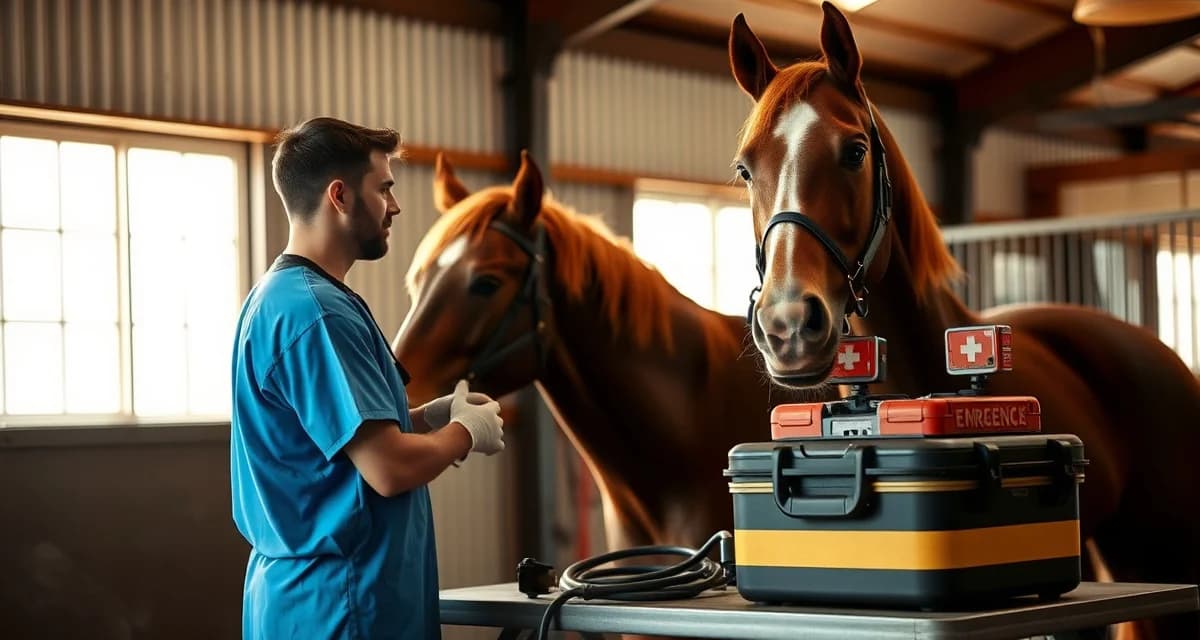
Emergency Vet Protocols for Equestrian Facilities
Every barn, regardless of size, needs a documented emergency veterinary protocol. When a horse is in crisis, the last thing you want is to be making decisions about who to call, what authorization you have, and what steps to take in sequence. The protocol should answer all of those questions before the emergency happens.
Core Elements of an Emergency Vet Protocol
Primary and Emergency Veterinary Contacts
Your protocol should list:
- Your primary veterinary practice with main number and emergency line
- A backup veterinary contact if your primary practice is unavailable
- The nearest veterinary hospital with large animal capability and its after-hours number
Keep these numbers posted in the barn office, in the tack room, and accessible in your barn management software so any staff member can find them instantly.
Who Has Authority to Call the Veterinarian
Define clearly which staff members are authorized to call the veterinarian without first reaching the barn manager or owner. At most facilities, any staff member who observes a true emergency should have the authority and the obligation to call. Waiting to reach a manager while a horse colics is not appropriate.
Treatment Authorization
Your boarding agreements should specify the level of emergency treatment you are authorized to pursue without explicit owner consent. Standard clauses authorize emergency treatment necessary to preserve the horse's life or prevent serious suffering when the owner cannot be reached promptly.
Know what your agreement says and make sure your protocol reflects it.
Emergency Recognition: What Triggers the Protocol
Staff need to know what constitutes an emergency requiring immediate veterinary contact versus a situation that warrants monitoring and a call to the owner.
Call the Veterinarian Immediately
- Colic: pawing, rolling, flank-watching, elevated pulse, absent or abnormal gut sounds
- Severe lameness or non-weight bearing
- Wounds that are deep, heavily bleeding, or near joints and tendons
- Eye injuries
- Difficulty breathing or respiratory distress
- Temperature above 104°F or below 98°F
- Neurological signs: stumbling, head pressing, circling, loss of coordination
- Suspected choke (horse repeatedly extending neck, distressed, with feed material from nose)
- Foaling complications
Monitor Closely and Contact Owner
- Mild lameness that developed gradually
- Minor cuts and abrasions
- Small areas of swelling without heat
- Behavior changes without physical signs of illness
The Emergency Response Sequence
- Assess and secure the horse: Remove from turnout if applicable, secure in a safe location
- Call the veterinarian: Describe what you observe, not what you think is wrong
- Notify the owner: Call immediately after or simultaneously with the vet call, depending on staff available
- Follow veterinary instructions: Do exactly what the vet directs while waiting for arrival or emergency transport
- Document everything: Record what you observed, when, what was done, and by whom
Document all of this in the horse's horse health logs with precise timestamps. This record is valuable for the treating veterinarian and for your own facility documentation.
First Aid While Waiting for the Veterinarian
Your staff should be trained in basic equine first aid and know what they should and should not do while waiting for the vet.
Generally Appropriate While Waiting
- Keep the horse calm and prevent self-injury
- For colic: keep the horse walking if directed by the vet
- For lacerations: apply gentle pressure to control bleeding with clean material
- Monitor and record vital signs: pulse, respiration, temperature, gut sounds
What to Avoid
- Do not administer medications unless specifically directed by the veterinarian
- Do not force-walk a horse with a suspected tendon or bone injury
- Do not apply tourniquets
- Do not give anything by mouth to a horse with suspected choke
Colic Protocol Specifics
Colic is the most common equine emergency and the one your staff is most likely to encounter. A specific colic protocol within your broader emergency vet protocol is worth the extra detail.
Basic colic protocol:
- Remove feed immediately
- Check vital signs and record: pulse, respiration, temperature, gut sounds
- Call the veterinarian with your findings
- Follow veterinary instructions regarding walking, monitoring, or waiting
- Keep the horse away from feed until the vet clears it
- Notify the owner immediately
Training Your Staff
A written emergency protocol is only effective if your staff has read it, understood it, and practiced it. Walk through the protocol with all new staff during onboarding. Review it annually with existing staff. A brief tabletop exercise where you walk through a hypothetical emergency helps staff internalize the sequence before they face a real situation.
Pair your emergency vet protocols with your emergency owner notifications procedure so staff have a complete picture of how to respond when a crisis occurs.
FAQ
What is Emergency Vet Protocols for Equestrian Facilities?
An emergency vet protocol for equestrian facilities is a documented plan that outlines exactly what to do when a horse faces a medical crisis. It includes primary and backup veterinary contacts, staff authorization levels, treatment consent thresholds, and step-by-step response procedures. The goal is to eliminate guesswork during high-stress situations so staff can act immediately and decisively without waiting for managerial approval or scrambling to find phone numbers.
How much does Emergency Vet Protocols for Equestrian Facilities cost?
Developing an emergency vet protocol itself costs nothing beyond staff time to draft and review the document. However, facilities should budget for the veterinary services the protocol governs. Emergency large animal calls typically range from $200 to $500 or more just for after-hours farm visits, with treatments, diagnostics, and hospitalization adding significantly to that figure. Having a protocol in place helps control costs by enabling faster response and clearer treatment authorization limits.
How does Emergency Vet Protocols for Equestrian Facilities work?
An emergency vet protocol works by pre-answering every critical decision before a crisis occurs. Staff consult the protocol to identify who to call, in what order, and what treatment they are authorized to approve. Veterinary contacts are posted in multiple locations and stored in barn management software. Boarding agreements establish consent thresholds in advance. When an emergency happens, the protocol converts a chaotic situation into a clear, executable sequence of actions.
What are the benefits of Emergency Vet Protocols for Equestrian Facilities?
A documented protocol reduces response time, minimizes confusion among staff, and protects the facility legally. Horses receive faster care because no one is waiting for permission to act. Barn owners are protected when boarding agreements clearly define treatment authorization. Staff feel confident and empowered to respond correctly. Overall, the protocol improves outcomes for horses, reduces liability exposure, and builds trust with horse owners who board at your facility.
Who needs Emergency Vet Protocols for Equestrian Facilities?
Any equestrian facility that houses horses for boarding, training, or competition needs an emergency vet protocol, regardless of size. A private barn with two horses benefits just as much as a large boarding facility with fifty. If staff other than the owner are ever present, a protocol is essential. Facilities that host clinics or competitions should also have protocols that account for visiting horses whose owners may not be immediately reachable.
How long does Emergency Vet Protocols for Equestrian Facilities take?
Drafting a solid emergency vet protocol typically takes two to four hours of focused effort. That includes gathering veterinary contact information, reviewing boarding agreements for consent language, and writing out the response sequence. Review it annually or whenever key contacts change. Posting and distributing the protocol to all staff takes minutes. The upfront time investment is minimal compared to the cost of a delayed or mismanaged emergency.
What should I look for when choosing Emergency Vet Protocols for Equestrian Facilities?
Look for a protocol that is specific, actionable, and accessible. It should name real contacts with current phone numbers, not generic placeholders. It should define exactly which staff can authorize which treatments and up to what dollar threshold. It should be posted physically in the barn and stored digitally in your management software. A good protocol also includes basic first-response steps a trained staff member can take while waiting for the veterinarian to arrive.
Is Emergency Vet Protocols for Equestrian Facilities worth it?
Yes. A documented emergency vet protocol is one of the highest-value, lowest-cost investments a barn can make. Horses can decline rapidly in a crisis, and minutes matter. Facilities without a protocol risk delayed care, staff paralysis, legal disputes with owners, and worse outcomes for animals. The protocol costs almost nothing to create and can prevent thousands of dollars in losses while potentially saving a horse's life. Every equestrian facility should have one in place.