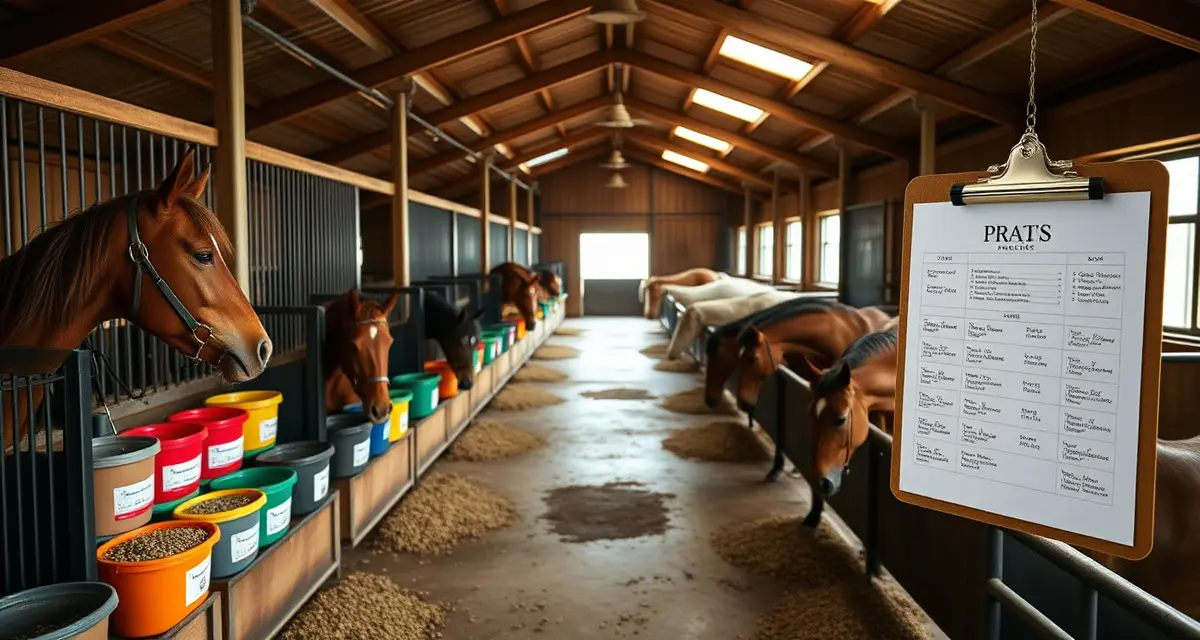
Feeding Program Card Generator for Horse Barns
Feed errors are the #2 cause of preventable colic according to AAEP 2023 data. In a busy barn with multiple staff members and dozens of horses, the margin for error is wide. A feeding program card generator closes that gap by giving every person on your team a clear, current record for each horse.
TL;DR
- Equine facilities in this region face specific climate and operational demands that affect care protocols year-round.
- Seasonal billing complexity is common where facilities serve both year-round boarders and winter or summer clients.
- Digital health records accessible from a phone are valuable when horses travel to regional competitions and events.
- Owner communication expectations vary by discipline but consistent updates reduce client turnover at all facility types.
- BarnBeacon is cloud-based and works for facilities across the US without any local installation or setup.
- Free trial allows regional facilities to test the platform with their actual operation and client mix.
The Problem With How Most Barns Track Feed
Most barns still rely on handwritten cards tacked to stall doors or a shared spreadsheet nobody updates consistently. Handwritten cards get wet, torn, or ignored. Spreadsheets sit on one person's laptop and don't alert anyone when a feed change is pending.
When a new groom starts or a regular employee calls in sick, the replacement is guessing. That's how a horse on a low-starch diet gets a full scoop of sweet feed, or a horse on a weight-gain program misses a supplement for three days straight.
The fix isn't more paper. It's a system that keeps every feed card current and visible to whoever is doing the feeding.
What BarnBeacon's Feeding Program Card Generator Does
BarnBeacon generates individual feed cards for every horse in your barn. Each card is visible to all staff on mobile devices and updates in real-time the moment you make a change. No reprinting, no chasing down who has the latest version.
You build each card once, then manage it from a central dashboard. When a vet recommends a feed change, you update it once and every staff member sees the new instructions immediately on their next feeding round.
What You Can Include on Each Card
- Hay type and quantity per feeding (morning, midday, evening)
- Grain type, brand, and scoop amount with meal timing
- Supplements listed individually with dose and which meal they go in
- Special instructions such as soaking hay, slow feeders, or grazing muzzle use
- Allergies and restrictions flagged visibly at the top of the card
- Owner notes for horses on custom programs
Every field is editable at any time. Changes are timestamped so you have a record of who updated what and when.
Who This Tool Is For
BarnBeacon's feeding program card generator is built for working barn managers, not software administrators. If you're managing a boarding facility, a training barn, or a layup operation with 10 to 100+ horses, this tool fits your workflow.
It's particularly useful when:
- You have multiple staff members or rotating grooms
- Horses have complex supplement stacks or medical dietary needs
- Owners frequently request feed adjustments
- You're managing horses for multiple trainers or owners under one roof
If you're already using feeding schedules to organize your barn's daily routine, feed cards are the natural next layer. Schedules tell staff when to feed; cards tell them exactly what to feed each horse.
How to Set Up Feed Cards in BarnBeacon
Step 1: Add Your Horse Roster
Enter each horse's name, stall number, and owner. This becomes the foundation for every card. You can import an existing list or add horses one at a time.
Step 2: Build Each Feed Card
For each horse, fill in hay, grain, and supplement fields. Use the notes section for anything that doesn't fit a standard field, such as "add water to grain" or "owner provides own supplement, stored in tack room."
Step 3: Set Feeding Times
Assign each card to one or more feeding times. Staff see only the horses relevant to their assigned feeding, which reduces confusion in large barns.
Step 4: Share With Your Team
Staff access cards through the BarnBeacon mobile app. No printing required, though printable PDF versions are available for barns that prefer a physical backup.
Step 5: Update as Needed
When a vet, nutritionist, or owner requests a change, update the card directly. The change is live immediately. You can also flag a card as "pending review" if a change is coming but not yet confirmed.
Handling Feed Changes Across a Large Barn
One of the most common pain points for barn managers is coordinating owner-requested feed changes. An owner calls on a Tuesday to say their horse should switch from alfalfa to grass hay. By Thursday, two different grooms have fed the horse two different things because the update never made it to the right people.
With a real-time horse feed card maker tool, that call becomes a 30-second update. The card changes, the history is logged, and the next person to pull up that horse's card sees the correct instructions.
For barns managing horses with medical conditions, this connects directly to medication tracking. Some dietary changes are tied to treatment protocols, and having both systems in one place means nothing falls through the cracks.
Common Mistakes to Avoid
Leaving the notes field blank. Generic cards miss the details that matter most. A horse that needs his grain dampened or can't have pelleted hay needs that noted explicitly.
Not assigning ownership of updates. Decide who is responsible for updating feed cards when changes come in. If everyone assumes someone else will do it, cards go stale.
Skipping the supplement section. Supplements are where feed errors most often happen. They're easy to forget, easy to double-dose, and often the most expensive part of a horse's diet. List every supplement by name, dose, and meal.
How do I manage feeding schedules for 30+ horses?
The key is a centralized system where each horse has its own card and staff can filter by feeding time or barn section. BarnBeacon lets you assign horses to feeding groups so a groom doing the east barn sees only those horses. Trying to manage 30+ horses with a single shared list or whiteboard creates too much room for error.
What should a horse feed card include?
A complete feed card should list hay type and quantity, grain type and amount, all supplements with individual doses and timing, any special preparation instructions, dietary restrictions or allergies, and a notes field for anything unusual. Cards should also show the date of the last update so staff know they're looking at current information.
How do I handle owner-requested feed changes across a whole barn?
Designate one person to receive and enter all feed change requests, whether they come by phone, text, or email. When the change is entered into the system, it's immediately visible to all staff. Keeping a log of who requested the change and when protects you if there's ever a dispute about what a horse was being fed and why.
What is the most common mistake barn managers make with record-keeping?
The most common record-keeping mistake is logging health events, billing items, and care tasks after the fact from memory rather than at the time they occur. Delayed logging introduces errors, omissions, and disputes that are difficult to resolve because the original record does not exist. Moving to real-time digital logging, from any device, is the single most impactful record-keeping improvement available to most facilities.
How does barn management software save time at a multi-horse facility?
The largest time savings come from eliminating manual tasks that recur at high frequency: sending owner updates, generating monthly invoices, tracking care task completion across shifts, and scheduling recurring appointments. At a facility with 25 or more horses, these tasks can consume several hours per day when done manually. Automating the routine layer returns that time without reducing quality of communication or care.
FAQ
What is Feeding Program Card Generator for Horse Barns?
A Feeding Program Card Generator for Horse Barns is a digital tool that creates standardized, horse-specific feed instruction cards for every stall in your facility. Instead of relying on handwritten notes or outdated spreadsheets, it produces clear records showing each horse's grain type, quantities, supplements, and timing. Platforms like BarnBeacon make these cards accessible from any device, so all staff—including new hires or substitutes—always feed correctly regardless of who is on shift.
How much does Feeding Program Card Generator for Horse Barns cost?
Cost varies by platform and facility size. BarnBeacon offers a free trial so barn managers can test the tool with their actual horse roster before committing. Paid plans are typically structured around the number of horses or users. Given that feed errors are the second leading cause of preventable colic according to AAEP 2023 data, even modest monthly software costs are easily justified by avoiding a single emergency vet call.
How does Feeding Program Card Generator for Horse Barns work?
The generator works by letting you input each horse's feeding details—feed type, amounts, supplements, and schedule—into a centralized system. It then produces formatted cards viewable on any phone or tablet and printable if needed. When a feed change is made, the system updates instantly across all devices. Staff scan or pull up the card at feeding time, confirm the instructions, and log completion, creating an auditable record of every feeding.
What are the benefits of Feeding Program Card Generator for Horse Barns?
Key benefits include reduced feed errors, clearer staff communication, and faster onboarding for new employees. Digital cards eliminate the problems of wet, torn, or ignored stall-door notes. Changes made by a vet or owner update instantly for the entire team. For multi-staff barns managing dozens of horses, the consistency alone reduces colic risk. Cloud-based access also means traveling horses carry their feed records to competitions without extra paperwork.
Who needs Feeding Program Card Generator for Horse Barns?
Any barn with more than one staff member feeding horses benefits from a feeding program card generator. This includes boarding facilities, training barns, breeding operations, and lesson programs. The need is especially acute when staff turnover is high, when horses have complex medical diets, or when multiple owners have different feeding preferences. Facilities juggling year-round boarders alongside seasonal clients have particularly variable feed rosters that benefit from automated, up-to-date card management.
How long does Feeding Program Card Generator for Horse Barns take?
Setup typically takes under an hour for most barn managers. You enter each horse's current feed program into the system once, and cards are immediately ready for staff use. Ongoing time investment is minimal—changes take seconds to update and propagate instantly. Compared to maintaining a handwritten system or chasing spreadsheet edits, most facilities reclaim meaningful time every week. BarnBeacon is cloud-based with no local installation, so there is no technical setup delay.
What should I look for when choosing Feeding Program Card Generator for Horse Barns?
Look for a system that updates in real time and is accessible from mobile devices—static PDFs or shared spreadsheets don't solve the core problem. Prioritize platforms that allow per-horse customization for supplements, timing, and special instructions. Built-in alerts for pending feed changes and feeding logs that create an audit trail are valuable for accountability. Integration with broader barn management features like health records and owner communication adds compounding value over standalone feed tools.
Is Feeding Program Card Generator for Horse Barns worth it?
Yes, for any barn where more than one person handles feeding. The cost of a single colic episode—diagnostic visits, treatment, and potential loss—dwarfs annual software costs by a wide margin. Beyond emergency risk, the daily operational clarity reduces staff stress, improves owner confidence, and shortens onboarding time for new hires. BarnBeacon's free trial removes financial risk entirely, letting you verify the fit with your actual operation before spending anything.
Sources
- American Horse Council, equine industry economic impact and facility operations research
- American Association of Equine Practitioners (AAEP), equine health care and management guidelines
- University of Kentucky Equine Initiative, equine business management and industry resources
- Rutgers Equine Science Center, equine management research and extension publications
- The Horse magazine, published by Equine Network, equine facility management reporting
Get Started with BarnBeacon
BarnBeacon brings billing, health records, owner communication, and daily operations into one platform built for equine facilities, so the time you spend on administration goes back to the horses. Start a free 30-day trial with full access to every feature, or schedule a demo to see how it handles your specific facility type.