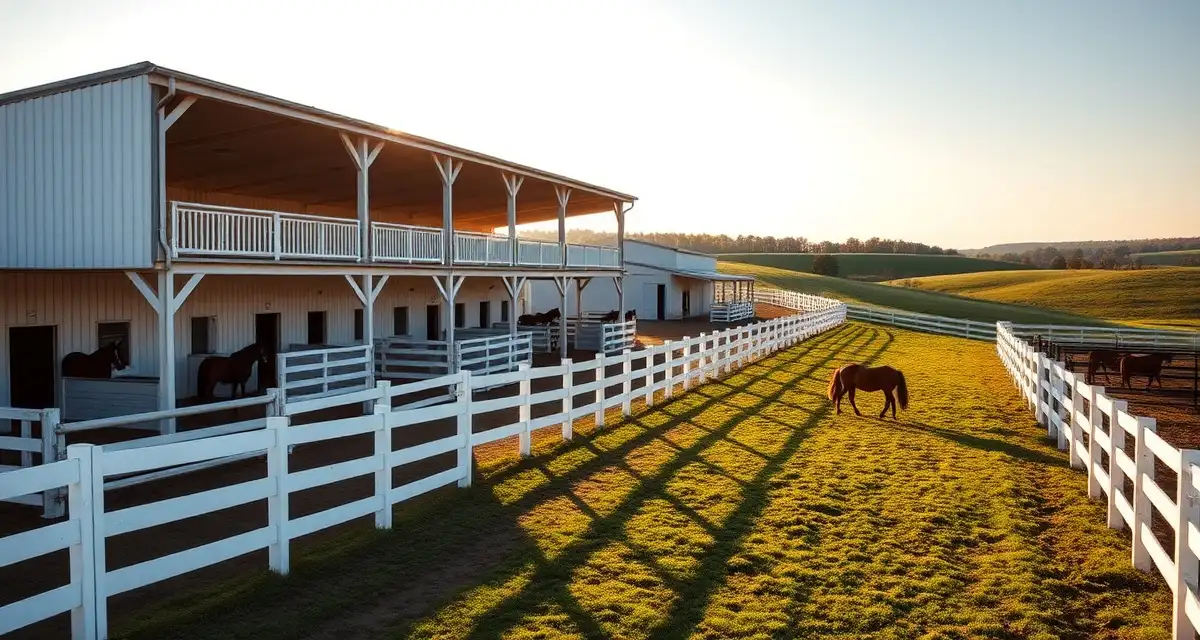
Tennessee Equine Facilities: Barn Management Guide
Tennessee holds a unique place in American equestrian culture. The state is the birthplace and heartland of the Tennessee Walking Horse, one of the most distinctive American breeds, and it hosts the Walking Horse National Celebration, one of the largest horse shows in the world. Beyond TWH, Tennessee has strong barrel racing and rodeo traditions, an active hunter-jumper scene centered in the Nashville and Williamson County area, and a significant western pleasure and trail riding community.
Tennessee's Equestrian Geography
The middle Tennessee basin, particularly Maury, Marshall, and Williamson counties, is Walking Horse country. This area has generations of breed history, established farms, and deep community ties to the industry. The horse farm infrastructure here, with rolling limestone country pastures and traditional barn architecture, supports large operations.
The Nashville metro area has a growing hunter-jumper and dressage community fueled by the city's expanding affluent population. Facilities in Williamson County and nearby counties serve this market with show-focused boarding and training operations.
East Tennessee, particularly around Walland and Maryville near the Smoky Mountains, supports strong trail riding operations with access to trail systems in the national forest and park.
Tennessee Walking Horse Industry Specifics
Walking Horse operations have specific management needs distinct from other disciplines. TWH training involves specific equipment and methodologies. Show horses require intensive preparation for the Celebration and other key events. Breeding operations, which are significant in the TWH industry, require separate management infrastructure.
The TWH industry has regulatory dimensions including oversight from the Horse Protection Act. Facilities involved in showing and training Walking Horses should maintain clear health and inspection records. BarnBeacon's veterinary records management helps maintain organized documentation of inspections and health evaluations.
Climate Considerations
Tennessee's climate includes hot, humid summers and mild to cold winters depending on elevation and location. Summer heat and humidity affect feeding schedules, turnout timing, and workload for performance horses. Adequate ventilation, water availability, and adjusted work schedules during peak summer heat are standard management practices.
Spring and fall are the primary riding seasons for most Tennessee operations. Many facilities have their highest activity levels during these periods and need staffing and scheduling to reflect that.
Regulatory Environment
Tennessee does not require a specific state license for horse boarding facilities but may require local business permits. The Tennessee Department of Agriculture oversees equine health requirements including Coggins testing for horses at public events and for interstate movement. Walking Horse shows have additional regulatory requirements under federal oversight.
Using Software at Tennessee Facilities
Tennessee's mix of small private barns, large show operations, and commercial boarding facilities creates diverse software needs. BarnBeacon handles the full range, from small barn management for private facilities to full-featured operations management for larger boarding and training barns.
Key tools for Tennessee facilities include billing and invoicing for show-related expense tracking, owner portal for client communication, and staff scheduling for managing the seasonal workload variations common in this region.
For Walking Horse facilities with specific regulatory compliance needs, BarnBeacon's health record management provides the documentation infrastructure to maintain organized records.
FAQ
What is Tennessee Equine Facilities: Barn Management Guide?
Tennessee Equine Facilities: Barn Management Guide is a comprehensive resource for horse facility operators across the state, covering best practices for managing barns that serve Tennessee's diverse equestrian communities — from Tennessee Walking Horse operations in Maury and Marshall counties to hunter-jumper facilities in Williamson County and trail riding stables near the Smoky Mountains. It addresses the specific needs of each discipline and region, helping facility owners run safer, more efficient, and more profitable operations.
How much does Tennessee Equine Facilities: Barn Management Guide cost?
A quality barn management guide for Tennessee equine facilities is typically available as a free online resource or as part of a barn management software subscription. Dedicated barn management software platforms range from roughly $50 to $200 per month depending on herd size and features. Many providers offer free trials, and some basic tools are available at no cost — making it accessible whether you run a small trail operation in East Tennessee or a large Walking Horse training facility.
How does Tennessee Equine Facilities: Barn Management Guide work?
A Tennessee equine facilities barn management guide works by walking facility operators through the key systems needed to run a horse operation: feeding schedules, stall and pasture rotation, health record tracking, farrier and vet appointment management, client communication, and billing. The guide outlines processes specific to Tennessee's climate, regional disciplines, and regulatory environment, while barn management software automates many of these tasks digitally, reducing paperwork and human error.
What are the benefits of Tennessee Equine Facilities: Barn Management Guide?
The core benefits include reduced administrative burden, better horse health outcomes through consistent record-keeping, improved client satisfaction, and stronger financial oversight. For Tennessee facilities specifically, the guide helps operators adapt to the state's humid summers, variable winters, and region-specific demands — whether managing a Walking Horse show barn's intense training calendar, a Nashville-area boarding facility's hunter-jumper clientele, or a mountain trail operation's seasonal fluctuations in ridership.
Who needs Tennessee Equine Facilities: Barn Management Guide?
Any Tennessee horse facility operator can benefit — from solo-owner boarding stables and backyard operations to large professional training barns preparing horses for the Walking Horse National Celebration. Trail ride outfitters near the Smoky Mountains, dressage and hunter-jumper trainers in Williamson County, and western pleasure facilities throughout middle Tennessee all face unique management challenges that a structured barn management approach can address regardless of operation size.
How long does Tennessee Equine Facilities: Barn Management Guide take?
Implementing a barn management system is not a one-time event — it's an ongoing operational framework. Initial setup, including digitizing health records, configuring billing, and establishing feeding and turnout protocols, typically takes one to four weeks. Daily use becomes routine within the first month. For larger Tennessee operations with multiple staff members or dozens of horses, full adoption across the team may take two to three months to standardize effectively.
What should I look for when choosing Tennessee Equine Facilities: Barn Management Guide?
Look for a guide or software that addresses Tennessee-specific needs: support for Walking Horse breed records, compatibility with TWHBEA documentation, climate-aware pasture and feeding recommendations for the mid-South, and flexibility to serve mixed-discipline operations. Practical features to prioritize include health and vaccination tracking, client billing and invoicing, staff scheduling, and mobile accessibility so managers can update records from the barn aisle rather than an office.
Is Tennessee Equine Facilities: Barn Management Guide worth it?
Yes — for any Tennessee horse facility handling multiple horses, clients, or staff, a structured barn management approach pays for itself quickly. Reduced missed appointments, cleaner billing, and better health record compliance lower both operational costs and liability. Given Tennessee's strong equestrian culture and competitive boarding and training market, facilities that operate professionally retain clients longer and attract new ones through reputation. The investment in good management practices is one of the highest-return decisions a facility owner can make.
What is the equestrian culture like in Tennessee?
Tennessee has deep roots in the Tennessee Walking Horse industry concentrated in middle Tennessee. The state also has strong western performance and barrel racing communities, a growing hunter-jumper market near Nashville, and significant trail riding operations in the eastern mountains.
What are the requirements for horse facilities in Tennessee?
Tennessee requires current Coggins testing for horses at public events. Local business permits may be required depending on the county and municipality. Walking Horse show operations have additional federal regulatory requirements.