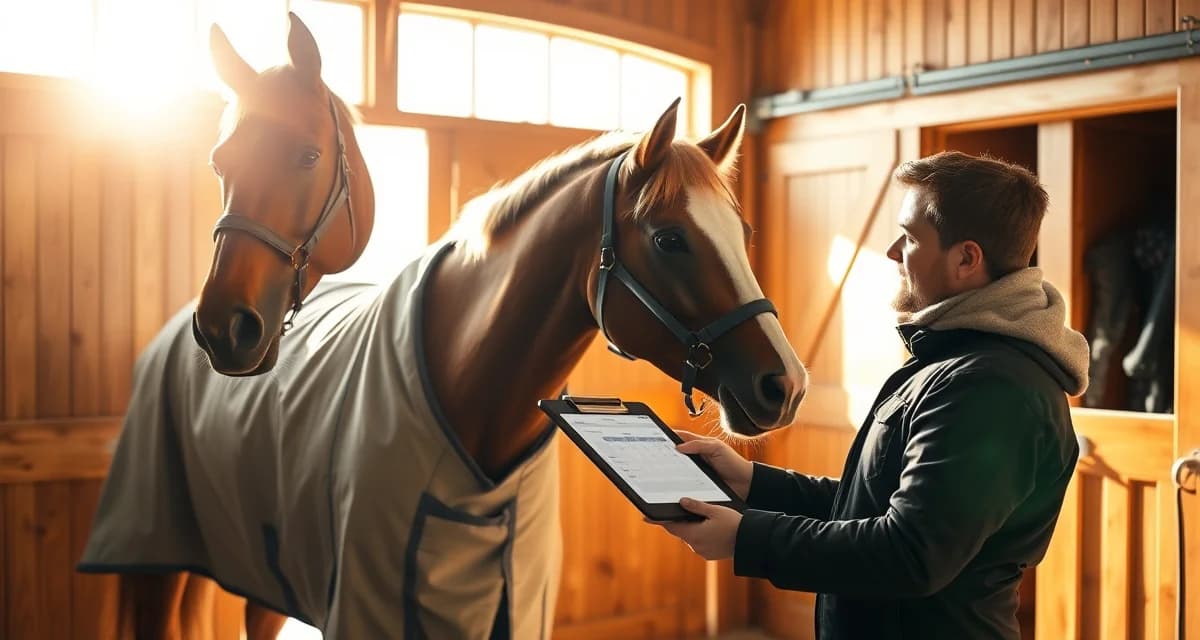
Winter Blanketing Schedule for Boarding Barns
Incorrect blanketing causes 18% of skin conditions in stabled horses, yet most boarding barns still run blanketing decisions off a handwritten whiteboard and a staff member's best guess at the morning temperature. That gap between intention and execution is where horses end up sweating under a heavy blanket at 45°F or shivering through a cold snap with nothing on.
TL;DR
- Blanketing consistency matters as much as blanketing correctly; a horse managed inconsistently has reduced ability to regulate body temperature.
- Clip status is the primary determinant of when blanketing begins; a fully clipped horse may need a blanket at temperatures above 50 degrees Fahrenheit.
- Daily blanket checks should verify fit, absence of rub marks at withers and shoulders, and appropriate weight for current conditions.
- A written per-horse blanketing protocol eliminates nightly judgment calls and inconsistencies across multiple staff members.
- Logging blanket changes in a digital barn management system gives all staff current information without requiring verbal shift handoffs.
Building a structured winter blanketing schedule for your boarding barn eliminates that guesswork. This guide walks through temperature thresholds, on/off protocols, and how to manage 30, 50, or 100 different owner preferences without losing your mind.
Why Blanketing Decisions Go Wrong at Scale
One horse is easy. Fifty horses with different owners, different clip levels, different ages, and different blanket weights is a logistics problem.
Staff turnover means institutional knowledge walks out the door. A new groom doesn't know that the 28-year-old Thoroughbred in stall 12 needs a blanket at 50°F while the unclipped draft cross next to him is fine until it hits 30°F. Without a documented system, those calls get made inconsistently, and horses pay for it.
Step 1: Set Your Barn's Base Temperature Thresholds
Establish a Tiered Temperature Chart
Start with a baseline chart that covers the most common horse profiles at your barn. These thresholds are widely used in equine veterinary practice and give staff a defensible starting point:
| Horse Profile | Light Blanket | Medium Blanket | Heavy Blanket |
|---|---|---|---|
| Healthy adult, unclipped | Below 20°F | Below 10°F | Below 0°F |
| Healthy adult, trace clip | Below 40°F | Below 25°F | Below 15°F |
| Healthy adult, full clip | Below 50°F | Below 35°F | Below 20°F |
| Senior horse (20+) | Below 50°F | Below 35°F | Below 20°F |
| Young horse (under 2) | Below 45°F | Below 30°F | Below 15°F |
Post this chart in the tack room, the feed room, and anywhere staff start their morning rounds. Laminate it.
Account for Wind Chill and Precipitation
A dry 35°F day is not the same as a wet, windy 35°F day. Build a simple rule into your protocol: if wind chill drops the feels-like temperature 10°F or more below the actual temperature, treat it as the lower number. If it's raining or sleeting, move each horse up one blanket weight category.
Step 2: Document Every Horse's Individual Blanketing Profile
Create a Per-Horse Blanketing Card
Every horse at your barn needs a blanketing profile on file before winter starts. Collect this information from owners in writing, not over text message. Each profile should include:
- Clip status (none, trace, body, full)
- Age and any health conditions affecting thermoregulation
- Blanket weights owned and their location in the barn
- Owner's preferred temperature thresholds if they differ from barn defaults
- Emergency contact if a blanket is damaged or missing
Store these profiles somewhere every staff member can access them quickly, not in a binder that lives in the barn manager's office. Our blanketing guide includes a downloadable profile template you can adapt for your barn.
Flag Horses That Need Special Handling
Mark horses with Cushing's disease, anhidrosis, recent illness, or significant weight loss as high-priority. These horses may need blanketing at temperatures where a healthy horse would be fine. A simple color-coded stall card system works well for visual identification during rounds.
Step 3: Build Your Daily On/Off Protocol
Set a Decision Time
Pick one time each morning, typically between 6:00 and 7:00 AM, when the blanketing decision gets made for the day. The person making that call checks the actual temperature, the forecast high, wind chill, and precipitation. They then apply the barn's threshold chart against each horse's profile.
Don't make this decision ad hoc throughout the day. Inconsistency is how horses end up over-blanketed by the afternoon when temperatures climb 20 degrees from the morning low.
Define Your Afternoon Check
Temperatures swing significantly in winter, especially in transitional climates. Build a mandatory afternoon check into your barn daily checklist at around 2:00 PM. If the temperature has risen more than 15°F from the morning low, staff should assess whether blankets need to come off or be swapped for a lighter weight.
Create a Blanket-Off Trigger
Horses that are sweating under a blanket are worse off than horses with no blanket at all. Train staff to check for sweat at the chest, neck, and behind the ears during every feeding. A wet horse in a blanket is an immediate remove-and-reassess situation, regardless of the outside temperature.
Step 4: Communicate with Owners Without Creating Chaos
Set Clear Expectations at Boarding Agreement Sign-Off
Your boarding contract should specify that the barn follows a documented blanketing protocol and that staff will apply owner preferences within that protocol. This protects you legally and sets the expectation that owners cannot text individual requests to individual grooms.
Use a Single Communication Channel
Whether it's a barn management app, a group email, or a posted daily log, all blanketing decisions should be recorded and visible to owners in one place. When an owner can see that their horse's blanket was swapped at 2:15 PM because the temperature hit 52°F, they stop sending the "did you check on my horse?" texts.
Handle Disagreements in Writing
If an owner wants their horse blanketed at thresholds that conflict with your professional judgment, document the conversation and get written sign-off. You are responsible for the horses in your care. A paper trail matters.
Step 5: Use Technology to Reduce Human Error
Automate Temperature Monitoring
Manual temperature checks depend on someone remembering to do them. barn management software like BarnBeacon pulls local forecast data and sends automatic blanketing alerts to staff based on each horse's individual clip and age profile. When the overnight forecast drops below a horse's threshold, the alert goes out before staff arrive in the morning.
This is something most barn management tools don't offer. Many platforms track feeding and health records but leave blanketing decisions entirely to manual processes. Temperature-triggered alerts tied to per-horse rules close that gap.
Log Every Blanketing Change
Every time a blanket goes on, comes off, or gets swapped, it should be logged with a timestamp and the staff member's name. This data is useful for spotting patterns, defending your protocol to concerned owners, and training new staff on how decisions actually get made at your barn.
Common Mistakes to Avoid
Relying on one person's judgment. If your blanketing protocol lives in one barn manager's head, you have a single point of failure. Document everything.
Ignoring the afternoon temperature swing. Morning blanketing decisions made at 28°F can leave horses dangerously over-heated by a 55°F afternoon. Build the afternoon check in as a non-negotiable.
Using blanket weight as a substitute for fit. A poorly fitted blanket causes rubs, restricts movement, and can slip dangerously. Check fit at the start of every season and after any significant weight change.
Letting owner preferences override horse welfare. Some owners want their horse blanketed at temperatures where it's genuinely unnecessary. Have that conversation directly and document the outcome.
FAQ
What temperature does a horse need a blanket?
A healthy, unclipped adult horse in good body condition generally doesn't need a blanket until temperatures drop below 20°F. Clipped horses, seniors, young horses, and horses with health conditions need blanketing at significantly higher temperatures, often 40-50°F for a full clip. Wind chill and precipitation should always factor into the decision.
How do I manage blanketing preferences for 50+ horses?
The only scalable approach is a documented per-horse profile system combined with a clear barn protocol that owners agree to at sign-off. Trying to manage 50+ individual preferences through text messages or verbal instructions will result in errors. A barn management platform that stores each horse's profile and applies it against daily temperature data is the most reliable solution at that scale.
Can barn software send automated blanketing alerts to staff?
Yes, though not all platforms offer this feature. BarnBeacon, for example, sends automatic blanketing alerts based on the local weather forecast and each horse's individual profile, including clip status and age. This removes the dependency on a staff member remembering to check the forecast and cross-reference it against every horse's preferences before rounds begin.
How do I handle blanketing decisions when an owner disagrees with the barn's protocol?
Set blanket policy expectations at intake and get written agreement on who has decision-making authority for routine blanketing calls. Most boarding contracts give the barn manager authority to make routine care decisions in the owner's absence, including blanketing. When an owner has strong preferences that differ from the barn's standard protocol, document their specific instructions in the horse's record and follow them if they do not create a safety or welfare concern.
What is Winter Blanketing Schedule for Boarding Barns?
A winter blanketing schedule for boarding barns is a structured, written protocol that defines when and how horses are blanketed based on temperature thresholds, clip status, and individual horse needs. Rather than relying on staff guesswork or handwritten whiteboards, it standardizes decision-making across all team members. The schedule typically includes per-horse blanketing rules, daily check procedures, and a logging system so every staff member has accurate, up-to-date information without needing verbal shift handoffs.
How much does Winter Blanketing Schedule for Boarding Barns cost?
Creating a winter blanketing schedule costs nothing beyond staff time to build and implement. Most barns use a digital barn management system or a shared spreadsheet to log blanket changes and track per-horse protocols. If you upgrade to dedicated barn management software, pricing varies by provider but typically ranges from $30 to $150 per month. The cost of not having a schedule — vet bills from skin conditions, overheating, or chilling — is significantly higher.
How does Winter Blanketing Schedule for Boarding Barns work?
A winter blanketing schedule works by assigning each horse a written protocol based on clip status, coat type, age, and owner preferences. Temperature thresholds trigger specific blanket weights, and staff follow the protocol rather than making judgment calls. Daily blanket checks confirm fit, look for rub marks at the withers and shoulders, and verify the blanket weight matches current conditions. Changes are logged digitally so the full team stays aligned without relying on shift-to-shift verbal communication.
What are the benefits of Winter Blanketing Schedule for Boarding Barns?
A structured blanketing schedule reduces skin conditions caused by inconsistent blanketing, which account for roughly 18% of stabled horse skin issues. It ensures horses are neither sweating under excess weight nor shivering through cold snaps. Staff work faster with clear protocols, owner preferences are respected consistently, and barn managers can audit blanket history at any time. For larger operations managing 30 to 100 horses, standardization is the only practical way to maintain quality care across multiple staff members.
Sources
- American Association of Equine Practitioners (AAEP)
- University of Minnesota Extension Equine Program
- Rutgers Cooperative Extension Equine Program
- Kentucky Equine Research
- The Horse magazine
Get Started with BarnBeacon
Blanketing consistency across a multi-staff operation requires more than a whiteboard policy. BarnBeacon logs every blanket change with a timestamp and the staff member who made it, giving managers complete visibility into which horses are blanketed at what weight and when the last change was made. For facilities with multiple staff members making independent blanketing calls, BarnBeacon eliminates the uncertainty that leads to inconsistencies. If blanketing coordination is a recurring challenge at your barn, BarnBeacon gives your team a reliable system.