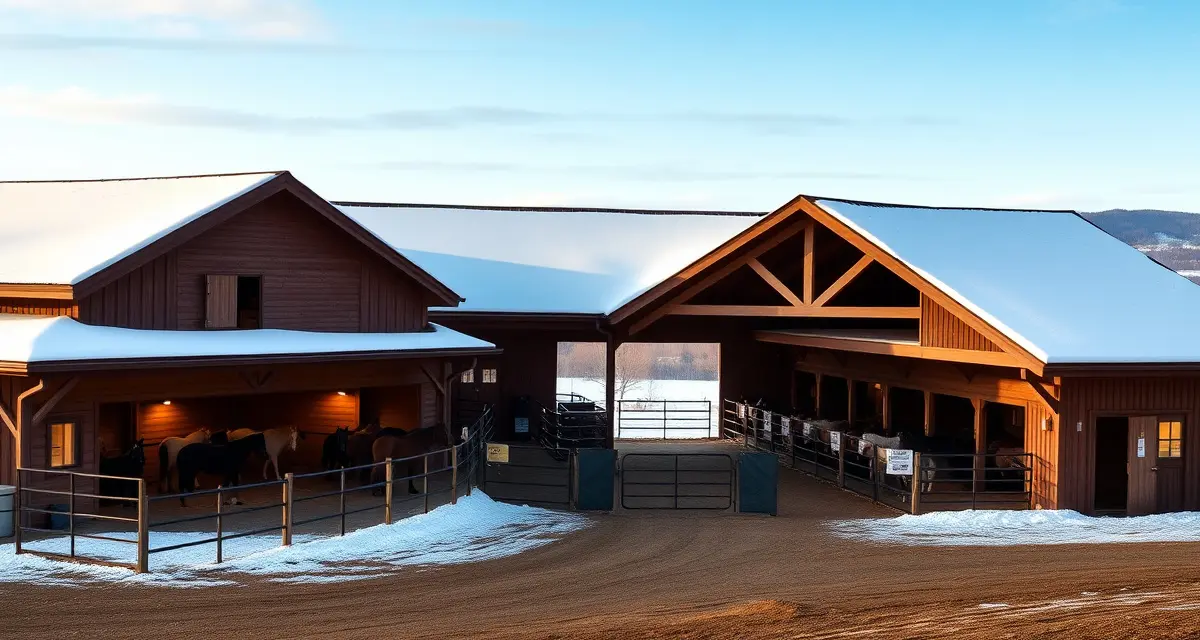
Barn Management for Vermont Equine Facilities
Vermont's equine facilities operate in a climate that demands year-round planning. Cold winters, a legendary mud season, short summers that don't leave much margin for pasture recovery, and the logistical challenges of a rural state with significant distances between farms and veterinary resources all shape how Vermont barn managers run their operations.
Vermont's Equine Community
Vermont has a strong equine tradition rooted in the Morgan horse, the breed officially developed in the state. Vermont Morgans remain a point of regional pride, and breeding programs, trail riding, and carriage driving all maintain significant followings alongside modern sport horse and hunter-jumper communities.
The state's geography means many equine facilities are genuinely rural, with small boarding barns serving local communities rather than large commercial operations. The 15 to 30 horse boarding barn within a 20-mile rural radius is more typical of Vermont than the 100-horse facility common in suburban markets. This scale has direct implications for barn management software: features designed for large commercial operations often add complexity without value for smaller Vermont facilities. BarnBeacon is designed to work for small barns without requiring scale to justify the cost.
Climate and Seasonal Operations
Winter. Vermont winters are serious. Extended periods below zero are common, and barn management during these periods requires protocols for frozen water lines, appropriate blanketing, footing safety on ice, and limited outdoor time during extreme cold.
Water access is the most critical winter management task. Frozen waterers or pipes that cut off a stall row are an emergency. A barn manager's winter protocols should include checking water access as a specific daily task, not assuming it will be noticed when something goes wrong.
Blanketing decisions become frequent during Vermont winters. Multiple blanket changes per day are common during temperature swings, and keeping track of which horses are in which blankets requires documentation when multiple staff handle care on different shifts.
Mud season. Vermont's mud season, roughly March through May, is one of the most demanding management periods for any farm. Paddock footing becomes dangerous, horses may be restricted to dry lots for weeks at a time, and turnout schedules require constant adjustment based on daily conditions.
Turnout management during mud season requires flexibility. The standard rotation schedule may be suspended entirely in favor of a drylot-only protocol. Documenting these deviations matters for boarder communication and for understanding your pasture's recovery trajectory.
Pasture management. Vermont pastures have a short growing season, roughly late May through early October under normal conditions. Getting the most from that window requires disciplined turnout rotation that preserves grass as long as possible into fall and allows early regrowth in spring. Overgrazing in a short season means a long supplemental feeding period.
Veterinary and Farrier Access
Rural Vermont means longer travel times for veterinary services and more careful advance scheduling for planned work. Emergency vet access is generally available, but response times in remote areas can be longer than in densely populated regions.
This makes on-site record-keeping more important, not less. When a vet arrives for a farm call, having complete health records, medication histories, and recent observations organized and accessible makes the visit more efficient. In a rural context, vet calls carry significant travel charges, so batching planned work and being prepared makes each visit count.
Farrier scheduling follows similar logic. Six-week appointment cycles in Vermont sometimes need to account for weather and road conditions, particularly in early spring when some dirt roads have weight restrictions. Building schedule buffer and maintaining clear records of last service dates helps avoid gaps.
Boarder Communication in a Small-Barn Context
Vermont boarding barns often have close relationships with their boarders. In a 20-horse facility, the manager knows every horse and owner personally, and communication tends to be informal and direct.
This can make documentation feel unnecessary, right up until it matters. A billing dispute, a health incident where the timeline needs to be reconstructed, or a coverage situation where a new staff member doesn't know a horse's particular needs will reveal whether the informal system was actually capturing what was needed.
BarnBeacon provides the documentation infrastructure without requiring a large operation to justify it. See staff care logging for daily documentation and owner portal for client-facing communication tools.
FAQ
What is Barn Management for Vermont Equine Facilities?
Barn management for Vermont equine facilities refers to the systems, routines, and software used to run horse operations across the state. Vermont's climate—harsh winters, mud season, and short summers—creates unique operational demands. Barn managers must coordinate feeding schedules, health records, farrier visits, and turnout rotations while accounting for weather disruptions and the rural distances between farms and veterinary services. Software like BarnBeacon helps smaller Vermont barns stay organized without the overhead designed for large commercial operations.
How much does Barn Management for Vermont Equine Facilities cost?
BarnBeacon is built to be affordable for the 15–30 horse barns that define Vermont's equine landscape. Unlike enterprise software priced for 100-horse facilities, BarnBeacon scales to smaller operations so the cost makes sense from day one. Pricing is straightforward with no hidden fees tied to horse count tiers that push small Vermont barns into plans they don't need. Check BarnBeacon.com for current pricing and any available trial options.
How does Barn Management for Vermont Equine Facilities work?
Barn management software centralizes everything a Vermont facility tracks daily—horse records, feeding and medication logs, board invoices, farrier and vet appointments, and pasture rotation schedules. Staff and managers access shared information from any device, reducing miscommunication between morning and evening crews. For Vermont barns dealing with winter weather disruptions or mud season pasture closures, having a single organized system means fewer things fall through the cracks when conditions change unexpectedly.
What are the benefits of Barn Management for Vermont Equine Facilities?
Effective barn management helps Vermont facilities reduce missed tasks, improve horse health oversight, and simplify the billing and communication that keeping a boarding barn financially healthy requires. For rural Vermont operations where the barn manager may also be the owner, trainer, and primary caretaker, having organized records saves hours each week. During mud season or a harsh winter stretch, a reliable system means critical health and feeding routines stay consistent even when everything else feels chaotic.
Who needs Barn Management for Vermont Equine Facilities?
Any Vermont equine facility with horses in their care benefits from structured barn management—boarding barns, breeding farms, lesson programs, and private multi-horse properties alike. The smaller scale typical of Vermont operations doesn't reduce complexity; it often concentrates responsibility onto fewer people. A 20-horse boarding barn in a rural Vermont town has the same core management needs as a larger facility, just with tighter margins and less administrative staff to absorb the workload.
How long does Barn Management for Vermont Equine Facilities take?
Getting a barn management system running doesn't take long. Most barn managers can set up BarnBeacon and start logging horses, contacts, and schedules within a few hours. Full adoption—getting staff comfortable, migrating existing records, and building consistent routines—typically takes a few weeks. Vermont facilities that commit to consistent daily use during the first month generally find the system becomes second nature before the seasonal demands of summer or winter hit.
What should I look for when choosing Barn Management for Vermont Equine Facilities?
Look for software that fits your actual barn size without charging for features you'll never use. For Vermont specifically, prioritize tools that handle health and medication tracking well, since rural distances make proactive veterinary record-keeping more important. Easy invoicing for board and services matters for cash flow. Offline or low-bandwidth reliability is worth checking given that some Vermont farm locations have inconsistent connectivity. BarnBeacon is designed with small-to-mid Vermont operations in mind rather than scaled-down from large commercial platforms.
Is Barn Management for Vermont Equine Facilities worth it?
For most Vermont barn managers, yes. The time saved on record-keeping, billing, and staff coordination pays back quickly—especially across mud season and winter when operational pressure is highest. Vermont's rural equine community relies on well-run small barns, and the margin for error is thin when one person carries most of the management load. A purpose-built tool like BarnBeacon removes friction from daily tasks so managers can focus on horse care rather than paperwork.